
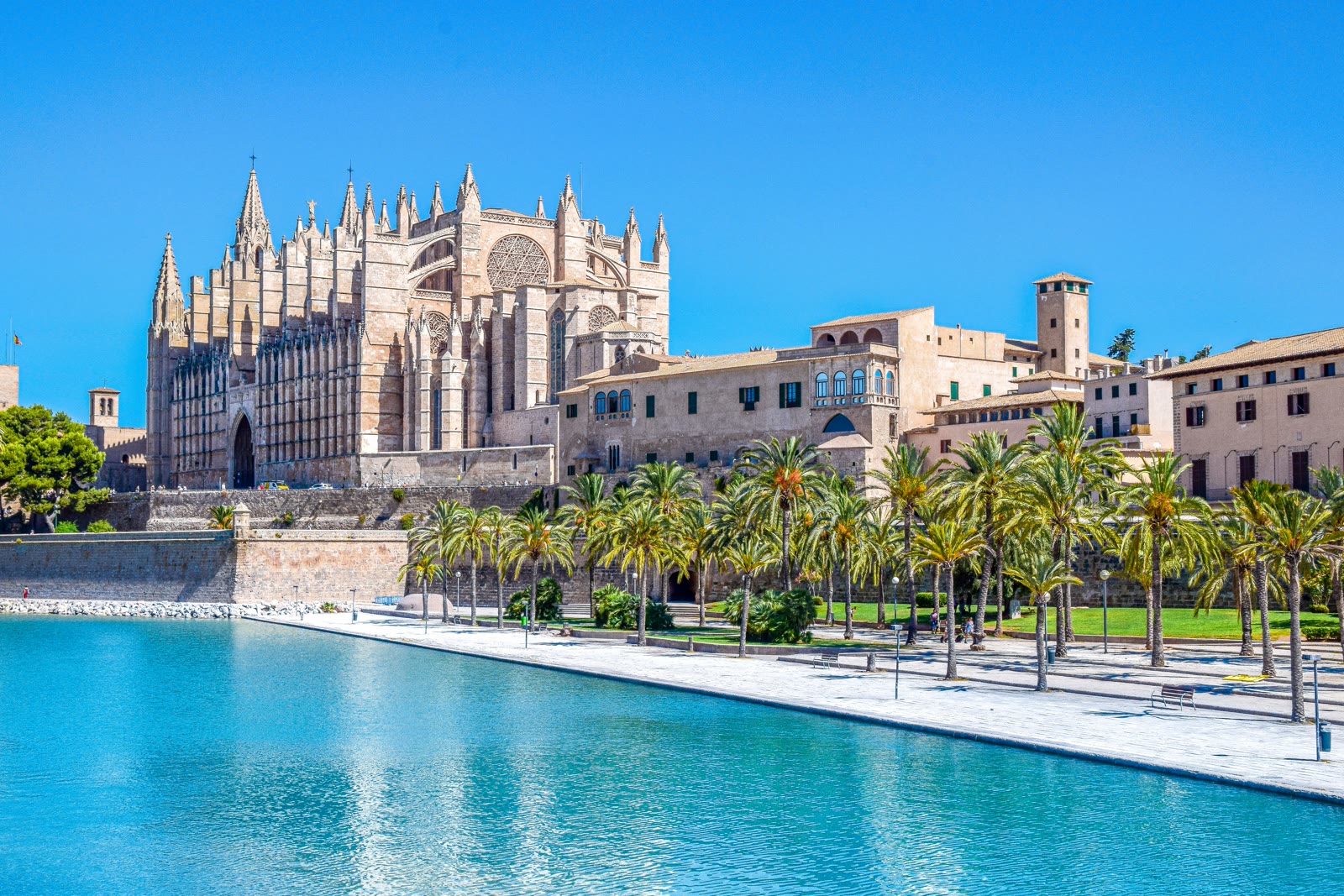


Palma de Mallorca, the capital of Spain’s Balearic Islands, sits on the south coast of Mallorca island with a population of 420,000 in the city and roughly 900,000 across the metro area. The city delivers a Mediterranean climate with hot, dry summers averaging 31°C (88°F) in July and August, mild winters around 15°C (59°F), and around 2,800 hours of sunshine per year. Palma is a year-round city, not a seasonal resort: it has a working port, a university, and a cultural calendar that operates 12 months a year, even if the beaches empty out between November and March.
Welcome to Palma de Mallorca
Located on the Bay of Palma with the Serra de Tramuntana mountains rising to the northwest, the city offers a compact historic core anchored by the 13th-century La Seu cathedral, one of Europe’s largest gothic structures. Beyond the old town, you’ll find a diverse set of neighborhoods: Santa Catalina with its market and restaurant scene, the seafront Passeig Marítim buzzing with nightlife, and the quiet former fishing village of Portixol to the east. Palma’s airport (PMI) handles over 33 million passengers annually, with direct flights from most European cities and seasonal services from North America, making it one of the Mediterranean’s most accessible island capitals.
Palma de Mallorca Weather at a Glance
Palma has a classic Mediterranean climate: hot, dry summers and mild, wet winters. The city gets roughly 450mm of rain annually, most of it concentrated between October and December. June through September are nearly rain-free, with July averaging just 6mm across a single wet day. Sea temperatures range from a chilly 14°C (57°F) in February to a bathtub-warm 26°C (79°F) in August. The sunniest stretch runs May through August with 10 to 11.5 hours of daily sun. Even winter months manage around 5 hours of sun per day, making Palma one of Europe’s sunniest cities year-round. See the full Palma weather by month guide for detailed monthly data.
Palma de Mallorca Seasonal Snapshot
- Spring (March to May): Temperatures climb from 17°C (63°F) to 23°C (73°F). Rain is moderate at 25-35mm per month. Almond blossoms give way to wildflowers. Cycling season peaks in April. Hotel prices remain reasonable until May. This is the best season for hiking in the Tramuntana.
- Summer (June to September): Hot and dry with highs of 27-31°C (81-88°F). July and August bring peak crowds, peak prices, and peak sea temperatures (24-26°C / 75-79°F). June and September are the sweet spots: warm water, fewer crowds, and hotel rates 15-20% below August.
- Autumn (October to November): October starts warm at 23°C (73°F) but rain increases to 70mm. November brings 58mm of rain and temperatures dropping to 19°C (66°F) by day, 10°C (50°F) at night. The sea stays swimmable through October at 22°C (72°F). Good season for cultural visits.
- Winter (December to February): Mild by European standards at 15-16°C (59-61°F) during the day, dropping to 5-7°C (41-45°F) at night. Hotel prices at their lowest (EUR 80-120 for 4-star rooms). The Sant Sebastià festival in January is the winter highlight.
Explore Palma de Mallorca
- Palma de Mallorca weather by month: Monthly temperature, rainfall, sunshine, and sea temperature data with a comparison table. Understand exactly what weather to expect each month.
- best time to visit Palma: The best months for weather, lowest crowds, cheapest prices, and specific events. Includes which months to avoid and why.
- things to do in Palma: La Seu cathedral, Bellver Castle, Miró Foundation, markets, beaches, and more, with opening hours, ticket prices, and practical tips.
- Palma events and festivals: Sant Sebastià, Nit de Foc, Nit de l’Art, Mallorca Live Festival, and the Palma Marathon, month by month with dates and what to expect.
- Palma neighborhoods guide: Old Town, Santa Catalina, Passeig Marítim, El Terreno, and the western suburbs. What each area offers, who it suits, and average hotel prices.
- where to stay in Palma: Hotels in every neighborhood and budget, from converted palaces in the old town to affordable guesthouses in Santa Catalina.
- Palma travel tips: Airport transport, bus and metro guide, tipping customs, tap water safety, visa rules, and what to pack by season.
Palma de Mallorca Quick Facts
- Best beach months: June to September, with September being the sweet spot (warm water at 25°C/77°F, thinner crowds)
- Warmest month: August (high 31°C/88°F, low 21°C/70°F)
- Coolest month: January (high 15°C/59°F, low 5°C/41°F)
- Wettest months: October (70mm) and November (58mm)
- Sunniest months: July (11.5 hrs/day) and June (11 hrs/day)
- Sea temperature range: 14°C (57°F) in February to 26°C (79°F) in August
- Annual rainfall: ~450mm across roughly 50 wet days
- Annual sunshine: ~2,800 hours
- Airport: Palma de Mallorca Airport (PMI), 8km east of the city center
- Currency: Euro (EUR)
Palma de Mallorca Location and Climate Influences
Palma sits on Mallorca’s south coast in the western Mediterranean, 250km east of Valencia and 280km south of Barcelona. The Serra de Tramuntana mountains, a UNESCO World Heritage site, shield the city from north winds, contributing to Palma’s mild winters. The mountains also create a rain-shadow effect that keeps the south coast drier than the north of the island. The Bay of Palma opens southeast toward the open Mediterranean, giving the city cooling sea breezes in summer. Mallorca is the largest of the Balearic Islands at 3,640 square km, with a diverse interior of olive groves, almond orchards, and mountain villages that are easily reached from Palma in under an hour by car.
Suggested Hotels in Palma de Mallorca
Can Bordoy Grand House and Garden
A restored 16th-century manor house in the old town with the largest private garden in central Palma, a heated plunge pool, and 24 suites with period features mixed with contemporary design. Best for couples seeking a romantic, design-forward base with exceptional service in the heart of the old town. Check rates and availability
Hotel Saratoga
A stylish four-star on Passeig Mallorca with a rooftop pool and jazz bar, positioned between the old town and the seafront nightlife. Best for couples and groups who want a lively central location with evening entertainment on site. Check rates and availability
Hotel Abelux
A clean, no-frills budget hotel 10 minutes’ walk from the seafront, with a small courtyard and simple but well-kept rooms. Best for solo travelers and budget-conscious visitors who want a quiet location with easy access to both the beach and old town. Check rates and availability
City Articles
Best Time to Visit Palma de Mallorca
Palma de Mallorca works as a destination year-round, but your ideal window depends on what you want. Beach lovers should target June to September, with September offering the best combination of warm water (25°C/77°F), fewer crowds, and hotel rates that are 15-20% lower than August. City-break travelers who want comfortable walking weather without the summer […]
Read MorePalma de Mallorca Events and Festivals
Palma de Mallorca’s event calendar follows the Mediterranean rhythm: quiet in winter, then building through spring to a summer peak, with a strong cultural autumn. The biggest celebrations are Sant Sebastià in January, Nit de Foc in June, and the Nit de l’Art in September. Mallorcan festivals blend Catholic tradition with pagan fire rituals, often […]
Read MorePalma de Mallorca Neighborhoods
Palma de Mallorca’s neighborhoods divide along clear lines: the medieval old town with its labyrinthine streets and historic buildings, the trendy Santa Catalina district with its food scene, the seafront promenade, and the residential suburbs stretching outward toward the Tramuntana foothills. Each area has a distinct character, price range, and ideal visitor type. Here’s a […]
Read MorePalma de Mallorca Travel Tips and FAQ
Palma de Mallorca is a straightforward city to navigate, but there are practical details that make a trip smoother: which terminal your airline uses, how much a taxi from the airport costs, whether you can drink the tap water, and what the tipping customs are. This Palma travel tips and FAQ guide covers the essential […]
Read MorePalma de Mallorca Weather by Month
Palma de Mallorca has a classic Mediterranean climate with hot, dry summers and mild, wet winters. The city averages 300 days of sunshine per year and about 450mm of rain, most of it falling between October and December. Sea breezes from the Bay of Palma keep summer heat manageable along the waterfront, though inland areas […]
Read MoreThings to Do in Palma de Mallorca
Palma de Mallorca packs an impressive number of sights into its compact old town, with the gothic cathedral La Seu as its undisputed centerpiece. Beyond the historic core, you’ll find a 14th-century circular castle, a contemporary art museum housed in a 17th-century fortress, and easy access to the Serra de Tramuntana mountains. Most attractions are […]
Read MoreWhere to Stay in Palma de Mallorca
Palma de Mallorca has accommodation for every budget, from converted 16th-century palaces in the old town to affordable mid-range hotels in Santa Catalina and resort-style properties in the western hills. Summer rates (June to September) are 50-80% higher than winter, with August hitting the absolute peak. Book at least three months ahead for summer visits, […]
Read More