This post may contain affiliate links. If you purchase through them, I may earn a small commission at no extra cost to you. Thanks for supporting our small business.
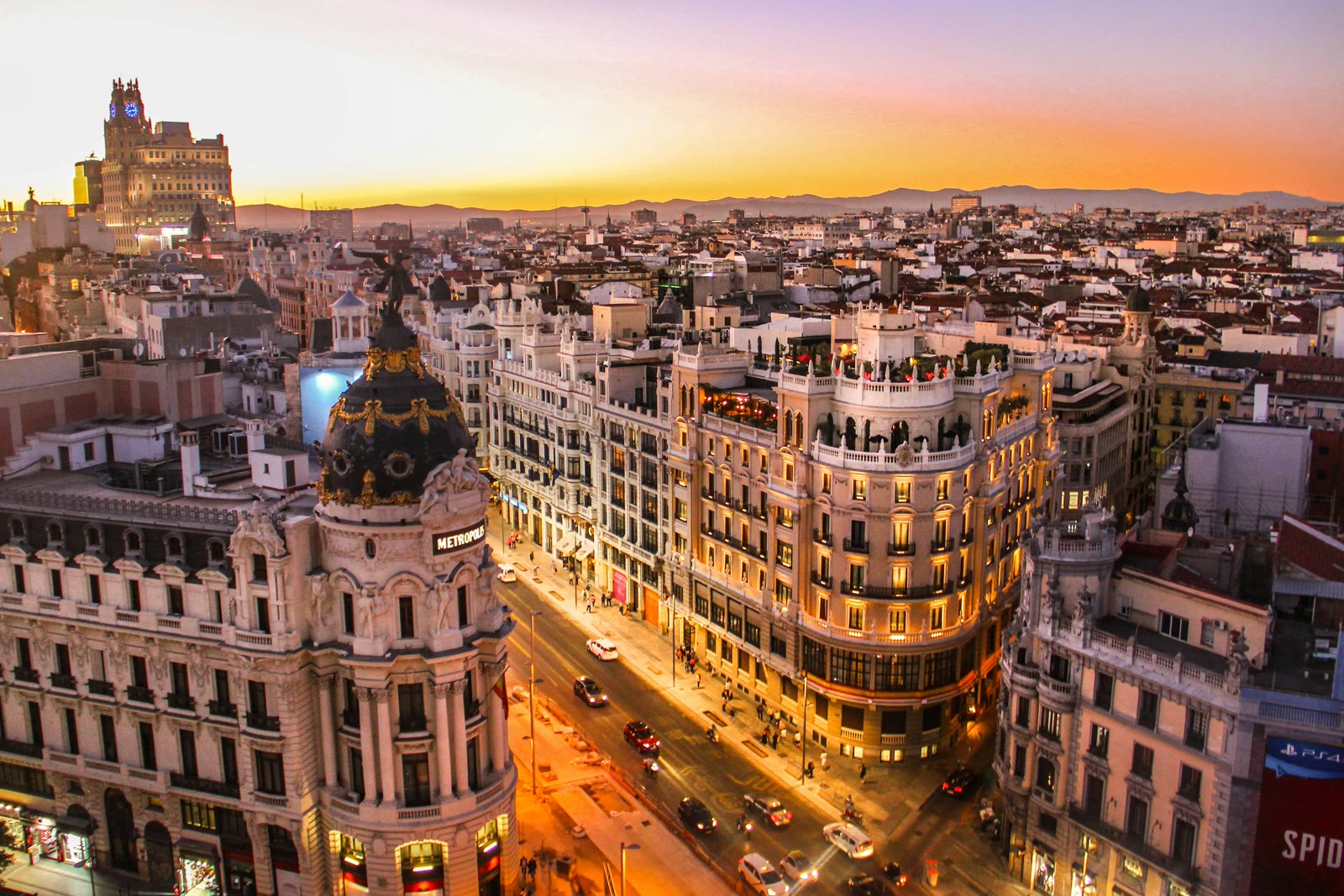
Madrid is worth three to five days, best visited in May or from mid-September to mid-October, and best based in Barrio de las Letras on a first trip. The city holds three of the world’s great painting collections within a ten minute walk of each other, eats later than almost anywhere in Europe, and costs meaningfully less than Barcelona or Paris.
It does not have Barcelona’s Gaudí or the coast’s beaches. What it has instead is a capital that still belongs to the people who live in it. The tapas bars on Calle Ponzano are full of Madrileños rather than tour groups, El Rastro on Sunday is a local ritual that visitors happen to join, and the neighborhood fiestas in August exist for the residents who stayed behind.
This guide gives you the overview and points you to the detail: climate, timing, neighborhoods, hotels, sights, festivals, and the practical rules that make the city legible.
Madrid at a Glance
| Elevation | 667 m (2,188 ft), the highest major capital in Europe |
| Climate | Hot-summer Mediterranean with continental influence |
| Hottest month | July, 33°C / 91°F average high |
| Coldest month | January, 10°C / 50°F high and 3°C / 37°F low |
| Annual rainfall | About 415 mm (16 in) across roughly 57 rainy days |
| Annual sunshine | About 2,760 hours |
| Wettest month | October, 62 mm |
| Best months | May, late September, October |
| Cheapest months | January, February, August, November |
| Currency | Euro |
| Tourist tax | None, unlike Barcelona and the coastal cities |
| Time needed | 3 days minimum, 5 to include a day trip |
Madrid’s Climate
Madrid sits at 667 m on the Meseta Central, roughly 300 km from the sea in every direction. That produces a hot-summer Mediterranean climate with strong continental behavior: summers hotter than the coast, winters colder than the coast, and very little rain at any time of year.
The altitude does two useful things. Summer humidity stays around 37% to 40%, so 33°C in Madrid is more bearable than 29°C in Barcelona, and shade genuinely works. And the city loses heat fast after dark, with the gap between the daily low and high averaging 11°C to 13°C and often exceeding 15°C in spring and autumn. A 23°C May afternoon becomes a 12°C evening on a terrace, which is the single most common packing mistake visitors make.
The old saying, nueve meses de invierno y tres de infierno, nine months of winter and three of hell, overstates both ends. Spring and autumn in Madrid are genuinely excellent, and the winter is cold rather than severe.
| Season | Highs | What it is like |
|---|---|---|
| Spring, March to May | 17°C to 23°C (63°F to 73°F) | Terraces reopen, parks at their best, San Isidro in mid-May. Wide daily temperature swings and the worst pollen of the year |
| Summer, June to August | 29°C to 33°C (84°F to 91°F) | Dry heat, heatwave spells to 38°C or more, almost no rain. Sightsee mornings and evenings, indoors from 2 PM to 6 PM |
| Autumn, September to November | 14°C to 27°C (57°F to 81°F) | Late September and October are close to ideal. October is the wettest month and November the greyest |
| Winter, December to February | 10°C to 13°C (50°F to 55°F) | Cold mornings with frost, mild bright afternoons, only 132 to 156 hours of sunshine a month. Snow is rare |
Exact monthly temperatures, rainfall, rainy days, humidity, and sunshine hours are in the Madrid weather by month guide, along with the records and the pollen calendar.
When to Visit
May is the best month. Highs of 23°C, 266 hours of sunshine, evenings warm enough for dinner outdoors at 10 PM, and the San Isidro festival around 15 May. Late September and October come very close and cost less.
Two things make Madrid’s calendar less obvious than it looks. May has the best weather and the worst pollen, since grass and olive counts peak together and Madrid records some of the highest grass pollen readings in Spain. And August is a low season rather than a peak, because residents leave for the coast and many family-run businesses close for two to four weeks, which means cheap rooms and a city running at half speed.
Avoid July if you can, at 33°C, with nights that stay above 20°C. December is atmospheric and the most expensive month of the year. January, February, and November are the cheapest, greyest, and best for a museum-focused trip.
The full ranking by weather, price, crowds, and pollen, plus recommendations by traveler type, is in the best time to visit Madrid guide.
Where to Stay in Madrid
Madrid’s center is compact enough that almost every neighborhood worth staying in sits within a 25 minute walk of Puerta del Sol. That removes proximity from the decision. What you are actually choosing is noise level, price, and what the street looks like at midnight.
| Neighborhood | Best for | Mid-range double | Night noise |
|---|---|---|---|
| Barrio de las Letras | First visits | €100 to €200 | Moderate |
| Madrid de los Austrias | Historic setting | €90 to €180 | Moderate |
| La Latina | Tapas and Sundays | €90 to €170 | High on weekends |
| Malasaña | Nightlife | €90 to €170 | Very high |
| Chueca | Dining, LGBTQ+ scene | €100 to €190 | High |
| Chamberí | Longer stays | €90 to €180 | Low |
| Salamanca | Luxury and quiet | €150 to €350 | Low |
| Retiro and Jerónimos | Families | €130 to €300 | Low |
Three Hotels, One Per Budget
Budget: Hostal Persal, Barrio de las Letras. Around €80 to €110 for a double, on Plaza del Ángel a minute from Plaza Santa Ana. A proper reception, breakfast, and a location within 15 minutes on foot of Sol, the Prado, and Retiro. In Spain a hostal is a licensed budget guesthouse with private rooms, not a dormitory hostel, and it is the best value bracket in central Madrid.
Mid-range: Room Mate Alicia, Plaza Santa Ana. Around €140 to €200. Design-led, central, and the corner rooms with curved windows over the square are worth requesting specifically. Close enough to the Huertas bar strip to walk home and far enough from it to sleep.
Luxury: Gran Meliá Palacio de los Duques, Madrid de los Austrias. From about €400. A 19th-century palace beside the Royal Palace, with gardens and a rooftop pool looking at the Almudena Cathedral. If budget is genuinely not a constraint, the Mandarin Oriental Ritz reopened in 2021 after a full restoration and remains the reference address in the city.
PRO TIP: Ask for an habitación interior, an interior-facing room around the building’s courtyard. Madrid is one of the loudest cities in Europe at night, dinner starts at 10 PM, bars run to 3 AM at weekends, and central buildings are 18th and 19th century with single glazing. This request is standard; hotels expect it, and in summer the courtyard side is cooler as well.
Neighborhood character, walking times, safety, and where not to stay are covered in the Madrid neighborhoods guide. Hotel picks for every budget in each area are in the where to stay in Madrid guide.
What to Do
Three world-class museums sit along Paseo del Prado, a UNESCO World Heritage avenue since 2021. The Prado holds the Spanish royal collection, including Velázquez’s Las Meninas, Goya’s Black Paintings, and Bosch’s Garden of Earthly Delights. The Reina Sofía is built around Picasso’s Guernica. The Thyssen-Bornemisza fills the gaps the other two leave and is the least tiring of the three. All have free evening windows, and the Reina Sofía closes on Tuesdays.
Beyond the art: the Royal Palace, the largest functioning royal palace in Western Europe with 3,418 rooms. Retiro, 125 hectares of former royal grounds with a rowing lake and the 1887 Crystal Palace. The Temple of Debod, an actual Egyptian temple from the 2nd century BC given to Spain in 1968, and the best sunset in the city. El Rastro on Sunday mornings, followed by vermouth in La Latina, which is the most reliably enjoyable three hours of the Madrid week.
Eating is an activity here rather than a break from one. The custom is one drink and one plate per bar, then walk to the next, which is why Cava Baja in La Latina and Calle Ponzano in Chamberí work as routes rather than destinations. Order a caña, never a pint.
The things to do in Madrid guide includes around 60 options, including museums nobody queues for, rooftop viewpoints, flamenco, and guided tours worth paying for.
A Three-Day Madrid Itinerary
| Day | Morning | Afternoon | Evening |
|---|---|---|---|
| Day 1 | Royal Palace and Almudena | Plaza Mayor, Austrias, Sol | Tapas along Cava Baja |
| Day 2 | Prado, two hours | Retiro and the Crystal Palace | Temple of Debod at sunset, then Malasaña |
| Day 3 | Reina Sofía and Guernica | Chamberí and Museo Sorolla | Ponzano, or flamenco at a tablao |
| Add a day | Toledo, 33 minutes by high-speed train from Atocha | Late dinner back in Madrid | |
Festivals and Events
Three events will change your trip. San Isidro around 15 May is the patron saint festival, with a week of free concerts, street parties, and traditional chulapo dress. MADO Pride in late June or early July draws more than a million people to Chueca and can triple central hotel rates. Christmas to Three Kings, from late November to 6 January, brings the lights, the Plaza Mayor market, and the Cabalgata de Reyes on 5 January, which is the best free spectacle of the Madrid year and attended almost entirely by locals.
Book six months ahead for MADO and the Christmas period, three months for San Isidro and Semana Santa. The full calendar, including the August neighborhood fiestas and the art and book fairs, is in the Madrid events and festivals guide.
Getting There and Getting Around
Adolfo Suárez Madrid-Barajas sits 13 km northeast of the center. Metro Line 8 costs €4.50 to €5.00 including the airport supplement, the 203 Express bus costs €5.00 and runs 24 hours, and a taxi is a regulated flat rate of €33 to anywhere inside the M-30 ring road, which covers every neighborhood in this guide.
In the city, the Metro runs 6 AM to 1:30 AM across 13 lines. You cannot buy a paper multi-trip ticket: everything except a single journey loads onto a Tarjeta Multi card costing €2.50, which several people can share on a 10-trip ticket. Do not rent a car for a city stay, since the low-emission zone is camera-enforced across the whole municipality and fines arrive automatically through the rental company.
Three habits make Madrid easier. Eat on local time, meaning lunch from 2 PM and dinner from 9:30 PM, because restaurants serving dinner at 7 PM are aimed at tourists. Do not tip more than rounding up, since staff are salaried and 15% marks you out. And ask for agua del grifo, since Madrid’s tap water comes from the Sierra de Guadarrama, is excellent, and is free.
The Madrid travel tips and FAQ guide covers fares, scams, museum closing days, tipping, safety, and daily costs.
What a Madrid Trip Costs
| Category | Budget | Mid-range | Higher end |
|---|---|---|---|
| Accommodation | €25 to €50 hostel | €90 to €180 hotel double | €250 and up |
| Food per day | €25 to €35 | €55 to €85 | €150 and up |
| Transport per day | €2.44 two Metro trips | €8 to €15 | €40 taxis |
| Sightseeing per day | €0 using free windows | €30 to €45 | €80 with tours |
| Daily total | €55 to €80 | €150 to €250 | €450 and up |
Day Trips
Toledo is the best of them, 33 minutes by high-speed train, a walled hill city that was the capital of Castile and a center of Christian, Muslim, and Jewish scholarship. Segovia has a Roman aqueduct standing without mortar since the 1st century. Ávila has the most complete medieval walls in Europe, and El Escorial is Philip II’s monastery-palace in the mountains.
Closer still, Aranjuez and Alcalá de Henares, Cervantes’ birthplace, are both UNESCO sites inside the Community of Madrid and both cheap by train.
All Madrid Guides
- Madrid weather by month: monthly temperature, rainfall, humidity, sunshine, records, and the pollen calendar
- Best time to visit Madrid: every month ranked on weather, price, crowds, and pollen
- Madrid neighborhoods: ten areas compared on price, noise, and character
- Where to stay in Madrid: hotel picks by budget in every neighborhood
- Things to do in Madrid: around 60 sights, itineraries, and guided tours
- Madrid events and festivals: the full annual calendar with costs and booking windows
- Madrid travel tips and FAQ: airport transfers, Metro fares, tipping, scams, and daily costs
Madrid FAQs
How many days do you need in Madrid?
Three full days covers the major museums, the old city, Retiro, and two or three neighborhoods at a reasonable pace. Four or five lets you add Toledo or Segovia and eat properly rather than efficiently.
What is the best time to visit Madrid?
May, for 23°C days, long evenings, and the San Isidro festival. Late September and October are close behind and cost less. Avoid July at 33°C, and note that May is also the worst month of the year for pollen.
Where should I stay in Madrid on a first visit?
Barrio de las Letras. It is within a 15-minute walk of Sol, Plaza Mayor, the Prado, and Retiro, has real neighborhood character, and sits at a moderate noise level. Madrid de los Austrias is the alternative if you want the historic core itself.
Is Madrid expensive?
Less than Barcelona for accommodation and roughly equal for food. Budget €55 to €80 a day at the low end and €150 to €250 mid-range, excluding flights. Madrid also charges no tourist tax, unlike most Spanish cities.
Is Madrid better than Barcelona?
They answer different questions. Barcelona has Gaudí, the sea, and a milder climate. Madrid has the greater art collections, better food across more price points, cheaper rooms, and a stronger sense of a city lived in rather than visited. For a first trip to Spain focused on architecture, Barcelona. For a second trip, or a food-led one, Madrid.
Is Madrid walkable?
Very. Almost every neighborhood worth staying in is within a 25 minute walk of Puerta del Sol, and central Metro stations sit close enough together that walking often beats riding once you count stairs and platform time.
What time do people eat in Madrid?
Lunch from 2 PM to 4 PM and dinner from 9:30 PM to 11 PM. Most kitchens close in between, so if you are hungry at 7 PM the answer is a tapas bar rather than a restaurant.
Is Madrid safe?
Yes. Violent crime against visitors is rare and the center stays busy until very late, which makes walking home feel safer than in most European capitals. Pickpocketing is the real risk, concentrated at Puerta del Sol, on Gran Vía, on Metro Lines 1 and 5, and at El Rastro on Sundays.
Do I need to speak Spanish in Madrid?
No. English is widely spoken in hotels, museums, and tourist restaurants, less so in neighborhood bars. Basic Spanish greetings are appreciated more here than in Barcelona, and a few words will change how you are treated on Calle Ponzano.
Does it snow in Madrid?
Rarely. Madrid sees snow falling on a handful of days a year and settling far less often. The exception was Storm Filomena in January 2021, which left about 50 cm and paralyzed the city, the heaviest snowfall since 1971.
Prices and opening times here were checked in August 2026 and do change. Climate figures come from AEMET normals measured at the Madrid Retiro observatory at 667 m, which has kept continuous records since 1920.