

 Cloudy
 Patchy rain nearby
 Partly Cloudy
This post may contain affiliate links. If you purchase through them, I may earn a small commission at no extra cost to you. Thanks for supporting our small business.
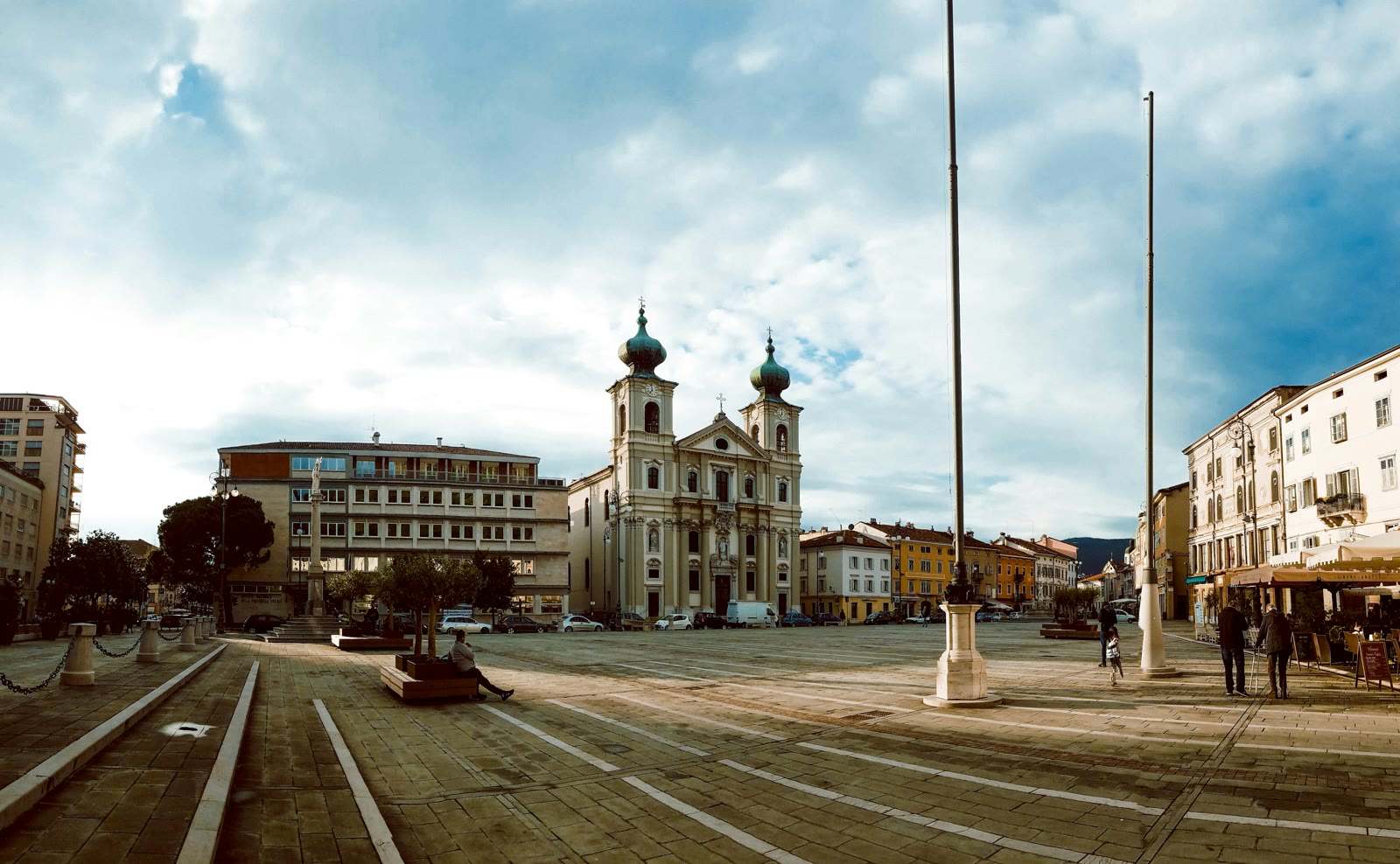
Gorizia is a border city of about 34,000 people in Italy’s Friuli-Venezia Giulia region, sitting directly against the Slovenian city of Nova Gorica, and it wears that divided history on every street. Once the Habsburg resort known as the Austrian Nice for its mild climate, the city spent the Cold War split in two and has since reunited around a single border square. It shares the GO! 2025 European Capital of Culture title with Nova Gorica and sits at the foot of the Collio wine hills, 45 minutes from Trieste. This guide covers the Gorizia weather year-round and links to seven focused articles on everything from monthly climate to where to stay.
Welcome to Gorizia
Gorizia compresses a lot of history into a small, walkable centre. The medieval Borgo Castello climbs from the old town to an 11th-century castle, and the Isonzo river marks the city’s eastern edge. In 1947 the Paris Peace Treaty drew the new border straight through the middle of the urban area, leaving Italy with the historic centre and Yugoslavia with the newer districts, which became Nova Gorica. Today the border is open and the two sides function as one city, but the contrast between the Italian old town and the Slovenian new town is one of the most interesting things about visiting.
Gorizia Weather at a Glance
Gorizia has a moderately continental climate with cold, damp winters and hot, humid summers, and it is one of the rainiest provincial capitals in Italy at about 1,340 mm a year. January averages 3.8°C (38.8°F) with lows just below freezing, while July averages 23.2°C (73.8°F) and tops out near 29°C (84°F). Rain falls every month, peaking at 175 mm in September and easing to 65 mm in February, with afternoon thunderstorms common in summer. The city gets only about three days of snow a year, so winter is more about fog and damp than heavy snow.
Seasonal Snapshot
- Spring (March-May): 8-17°C (46-63°F), green and wet with 80-110 mm of rain a month; the Collio vines and public gardens are at their freshest.
- Summer (June-August): 21-23°C (70-73°F), humid with highs near 29°C (84°F) and regular afternoon thunderstorms.
- Autumn (September-November): 8-18.5°C (46-65°F), the rainiest season at 145-175 mm a month, but September brings the harvest and the big food festival.
- Winter (December-February): 3.8-5°C (39-41°F), mostly dry and foggy with about 3 snow days; quiet, cheap and good for museums.
Gorizia Travel Guides
Seven focused articles cover planning a trip in detail:
- Gorizia weather by month: monthly temperatures, rainfall and a full climate table.
- Best time to visit Gorizia: the best windows for weather, prices, crowds and events.
- Things to do in Gorizia: the castle, border square, museums and wine day trips, with hours and prices.
- Events and festivals in Gorizia: Gusti di Frontiera, èStoria and the full annual calendar.
- Gorizia neighborhoods: the old town, Borgo Castello and the residential districts, mapped.
- Where to stay in Gorizia: the best areas and specific hotels in each.
- Gorizia travel tips: airports, transport, money, safety and the answers to common questions.
Location and Climate Context
Gorizia sits in the Isonzo river plain at 84 metres above sea level, framed by the Collio hills to the west and the Karst plateau to the east. That position shapes the weather: the Adriatic, about 30 km south, feeds humid air into the basin, while the surrounding hills trap cold air in winter and hold heat in summer. The result is the wet, muggy summers and foggy winters typical of the northern Adriatic lowland, with the Collio’s protected slopes running slightly warmer and drier than the city floor, which is why the vineyards have thrived here since Roman times.
Quick Facts
- Best months to visit: May, June and September for the mildest weather.
- Warmest month: July, averaging 23.2°C (73.8°F).
- Coldest month: January, averaging 3.8°C (38.8°F).
- Wettest month: September at 175 mm; November has the most rainy days (11).
- Driest month: February at 65 mm.
- Sea temperature: none, Gorizia is inland; the nearest beaches are at Grado, about 40 minutes away.
- Annual sunshine: roughly 9 hours a day in July, dropping to about 3 in December.
Where to Stay in Gorizia
The most convenient base is the Centro Storico, where two four-star hotels sit within a short walk of the castle and cathedral, while the station area and the Slovenian side offer cheaper rooms. Our where to stay in Gorizia guide breaks down both areas with specific hotels and apartments.
Suggested Hotels in Gorizia
Grand Hotel Entourage – Palazzo Strassoldo
A four-star in a 16th-century palace at the foot of Borgo Castello, the city’s most atmospheric place to stay. Best for couples. Check rates and availability
Best Western Gorizia Palace
A central four-star with free parking and an EV charger, the most practical choice in the old town. Best for families and drivers. Check rates and availability
Hotel Internazionale Gorizia
A three-star near the station with free parking, a restaurant and breakfast included. Best for budget and business travellers. Check rates and availability
