

 Patchy rain nearby
  Overcast
  Cloudy
 This post may contain affiliate links. If you purchase through them, I may earn a small commission at no extra cost to you. Thanks for supporting our small business.
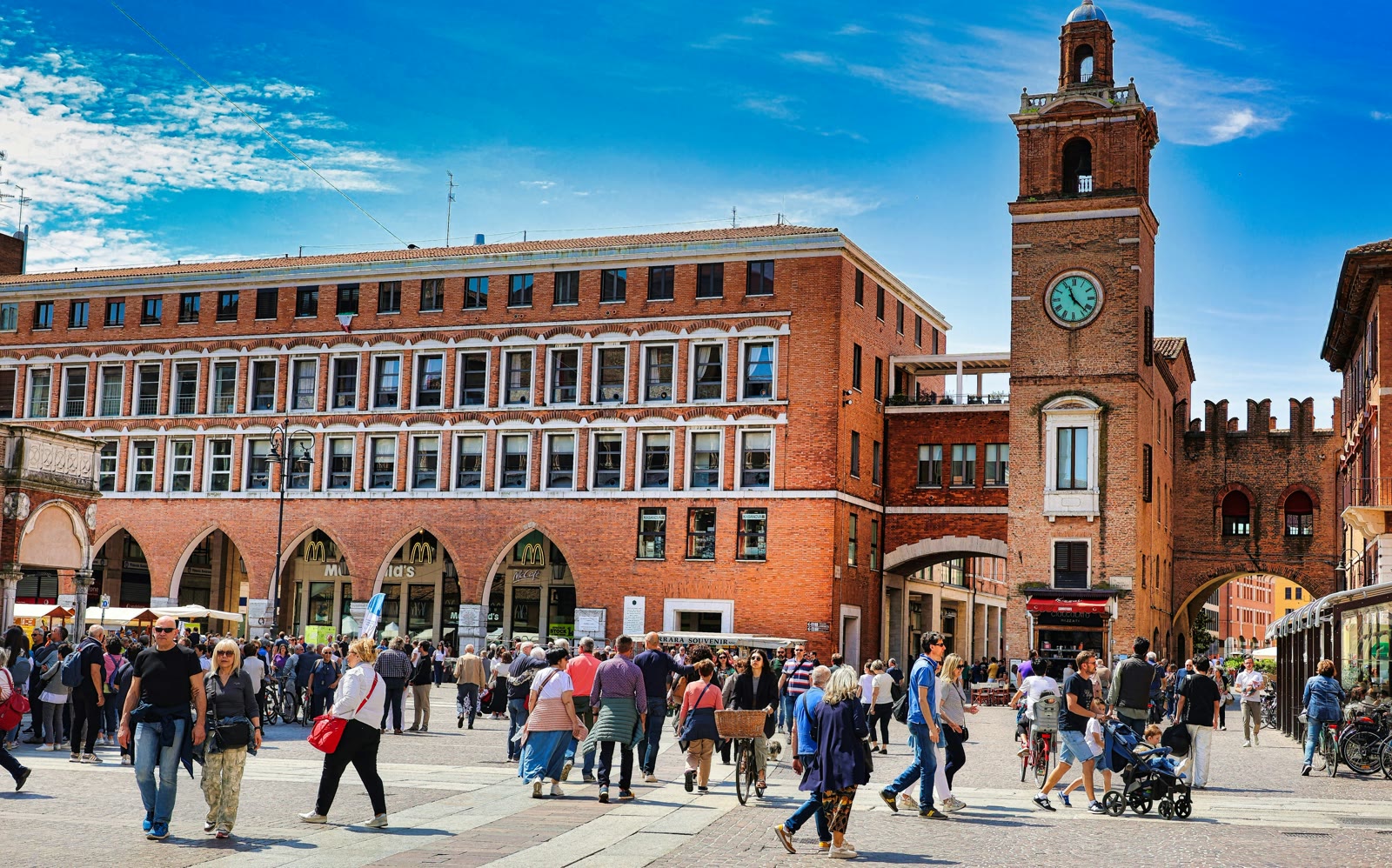
Ferrara is a UNESCO World Heritage city in northern Italy’s Emilia-Romagna region, sitting in the flat expanse of the Po Valley about 50 km (31 mi) from the Adriatic Sea. Founded around the 7th century, it reached its golden age under the Este family (1240-1598), who transformed Ferrara into a Renaissance powerhouse of art, architecture, and urban planning. Today Ferrara is one of Italy’s most liveable and bike-friendly cities, with 9 km of intact Renaissance walls encircling a compact medieval core of cobblestone streets, moated castles, and frescoed palaces. Despite its historical weight, Ferrara sees far fewer tourists than neighbouring Bologna or Venice, making it a relaxed base for exploring Emilia-Romagna.
Welcome to Ferrara
The first thing you notice about Ferrara is the flatness. The Po Valley stretches to the horizon in every direction, and the city’s defining feature , the fog (nebbia) , rolls in from the Po Delta on autumn and winter mornings, wrapping the red-brick buildings in a soft, ghostly light. The second thing you notice is the bicycles. Ferrara has more bikes per capita than any other Italian city, and cycling the elevated path atop the Renaissance walls is the single best introduction to the city. The Este Castle, with its four towers reflected in the moat, anchors the centre. From there, the medieval streets radiate outward: Via delle Volte with its arched passageways, the marble-encrusted Palazzo dei Diamanti, and the quiet convent of Sant’Antonio in Polesine where cloistered nuns still open the door to show visitors 14th-century frescoes. Ferrara doesn’t shout for attention the way Florence or Rome do. It asks you to slow down, park the car, get on a bike, and let the city reveal itself at its own pace.
Ferrara Climate at a Glance
Ferrara has a humid subtropical climate (Cfa), strongly shaped by its position in the Po Valley. Summers are hot and sticky: July averages 31°C (88°F) with humidity pushing the perceived temperature to 35-38°C (95-100°F). Winters are cold, damp, and famously foggy, with January highs of just 7°C (45°F) and overnight lows around 1°C (34°F). Spring and autumn offer the most comfortable conditions, with daytime temperatures of 18-25°C (64-77°F) and 6-8 hours of daily sunshine. Ferrara receives 650-700 mm (26-28 inches) of rain per year, spread evenly across 80-90 rainy days with no true dry season. The Po Valley fog is the city’s most distinctive weather feature, blanketing the city on 40-50% of mornings from October through February.
Ferrara Seasonal Snapshot
Here is what to expect from each season in Ferrara, with the best months for specific activities:
- Spring (March to May): The most comfortable season for sightseeing and cycling. Temperatures climb from 14°C (57°F) in March to 23°C (73°F) in May. May is the wettest month (62 mm). The Palio di Ferrara on the last Sunday in May is the city’s biggest event. Book accommodation 4-6 months ahead for Palio weekend.
- Summer (June to August): Hot and humid. July peaks at 31°C (88°F) with 10 hours of sunshine per day. Thunderstorms provide brief relief. August brings the Ferragosto holiday when some local businesses close, but the Ferrara Buskers Festival (late August) fills the streets with free music. Book air-conditioned accommodation.
- Autumn (September to November): September is warm and pleasant at 25°C (77°F). October is the rainiest month (72 mm) but autumn colours along the walls are attractive. The Internazionale journalism festival draws 70,000+ visitors in early October. November is the hardest month: low cloud, daily fog, temperatures 5-12°C (41-53°F).
- Winter (December to February): Cold, damp, and grey. Daytime highs 7-10°C (45-50°F), lows around 1°C (34°F). Fog on most mornings. December has just 2 hours of daily sunshine. The Christmas market brightens December. January and February are the cheapest months for hotels (€70-100 for a 4-star). Indoor attractions like the MEIS museum and Palazzo dei Diamanti work well in winter.
Ferrara Travel Guides
Our Ferrara travel guide collection covers everything from monthly weather data to the best neighborhoods and hotels. Explore each guide below:
- Ferrara Weather by Month – Monthly temperatures, rainfall, sunshine hours, humidity data, and the full story on the famous Po Valley fog.
- Best Time to Visit Ferrara – When to go for the best weather, fewest crowds, lowest hotel prices, and the city’s major events.
- Best Things to Do in Ferrara – Este Castle, Cathedral, Palazzo dei Diamanti, city walls cycling, the Po Delta, and day trips to Bologna and Comacchio.
- Ferrara Events and Festivals – Palio di Ferrara (May), Buskers Festival (August), Internazionale journalism festival (October), Ferrara Musica concert season.
- Ferrara Neighborhoods Guide – Centro Storico, Addizione Erculea, Jewish Ghetto, university quarter, and along the Renaissance walls.
- Where to Stay in Ferrara – Best hotels in every district at luxury, mid-range and budget price points with verified Booking.com links.
- Ferrara Travel Tips and FAQ – Airport transfers, cycling tips, what to eat, tap water safety, tipping, packing guide, and suggested hotels.
Where Is Ferrara?
Ferrara sits in the eastern Po Valley, 50 km (31 mi) from the Adriatic Sea and 30 minutes by train from Bologna (45 km / 28 mi southwest). Venice is 115 km (71 mi) to the northeast, Florence is 130 km (81 mi) to the south, and Milan is 240 km (149 mi) to the northwest. The Po River, Italy’s longest, flows 10 km north of the city. The Po Delta, a UNESCO Biosphere Reserve of lagoons, wetlands, and sandbars, begins just east of Ferrara at Comacchio. The city’s flat terrain (elevation 9 metres / 30 feet above sea level) and position in the valley explain its foggy, humid climate. The Adriatic moderates winter cold slightly but also supplies the moisture that condenses into the winter fog.
Ferrara Quick Facts
- Best months for weather: Late April, May, June, September, early October
- Warmest month: July (avg high 31°C / 88°F)
- Coldest month: January (avg high 7°C / 45°F, low 1°C / 34°F)
- Wettest month: October (72 mm average rainfall)
- Driest month: January (35 mm)
- Fog season: October through February (40-50% of mornings)
- Sunniest month: July (10 hours per day)
- Cheapest month for hotels: February
- Most expensive: Palio weekend: (last Sunday in May)
- Train to Bologna: 30 minutes, €5.15
- Nearest airport: Bologna BLQ (50 km, 1 hour 15 minutes by train + Aerobus)
- Bike rental: €8-12 per day
- UNESCO status: World Heritage since 1995
Where to Stay in Ferrara
Ferrara’s accommodation spans a 5-star luxury spa hotel in a Renaissance palace to budget B&Bs in the university quarter. The most atmospheric option is the Centro Storico (medieval core), where you step out of your hotel and onto Piazza della Cattedrale. For a quieter stay, the Addizione Erculea (Renaissance quarter) north of the castle offers elegant streets and palazzo hotels. Budget travellers should look in the university area south of the centre or at agriturismi in the surrounding countryside. See our full where to stay in Ferrara guide for area-by-area hotel recommendations at every budget.
Suggested Hotels in Ferrara
Hotel Duchessa Isabella Collection by GSA Hotels
Ferrara’s only 5-star hotel, set in a 16th-century palace with a garden, spa, and elegant rooms 600 metres from the Este Castle. The spa includes a sauna, Turkish bath, and treatment rooms. Best for couples and luxury travellers wanting a romantic Renaissance base. Check rates and availability
Hotel Annunziata
A 4-star mid-range hotel just 50 metres from the Castello Estense on Piazza Repubblica, in the pedestrian zone. Generous breakfast buffet, free Wi-Fi, and bike rental. Best for first-time visitors who want the most central location in Ferrara. Check rates and availability
Hotel De Prati
A family-run 3-star hotel in the medieval centre, 200 metres from the Cathedral. Classic rooms with wood-beamed ceilings, homemade cakes at breakfast. Best for travellers wanting authentic local character at a reasonable price. Check rates and availability
