

 Thundery outbreaks in nearby
  Light rain shower
 This post may contain affiliate links. If you purchase through them, I may earn a small commission at no extra cost to you. Thanks for supporting our small business.
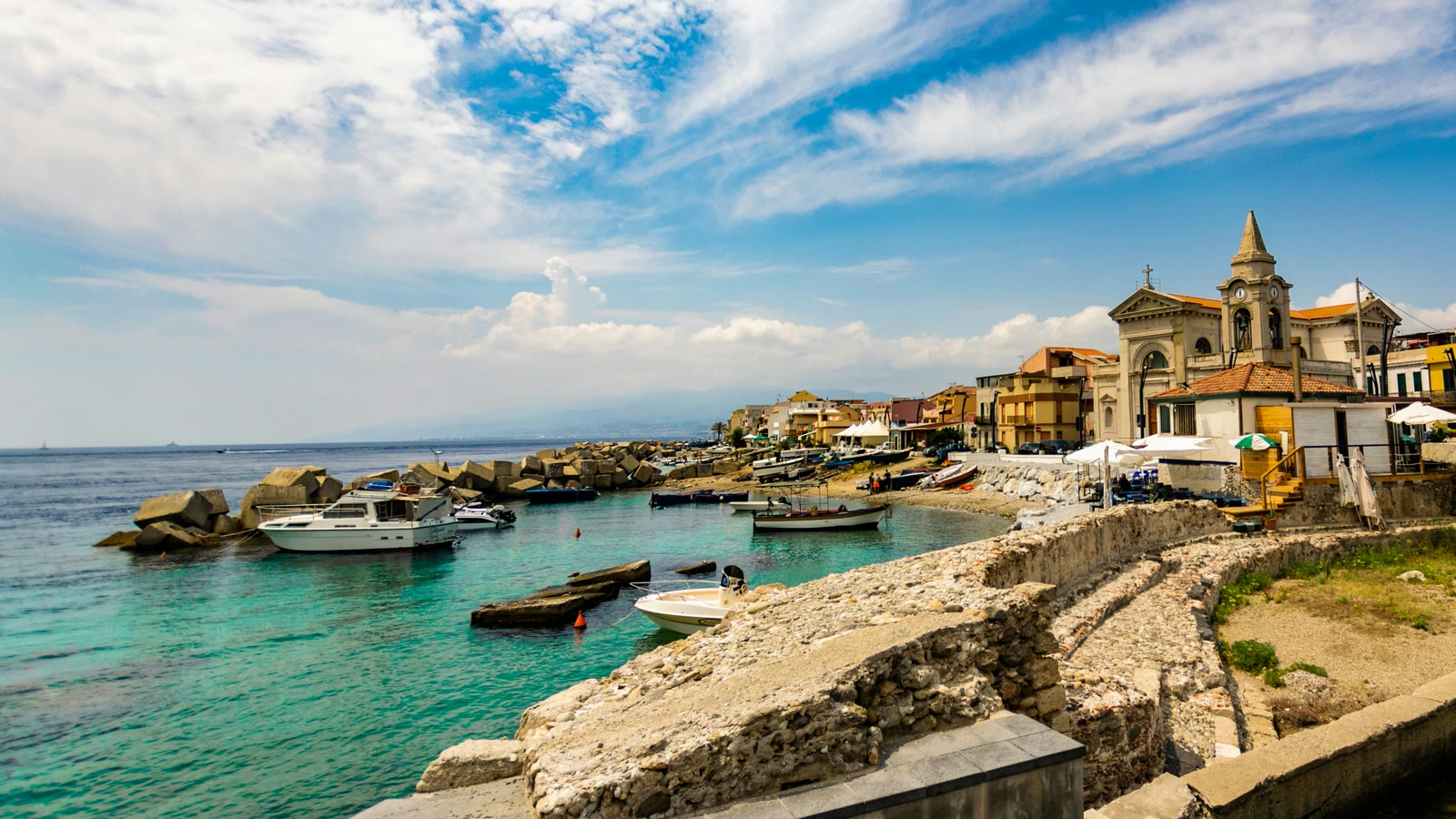
Messina is Sicily’s gateway city, perched on the northeastern tip of the island where the Ionian and Tyrrhenian seas collide at the Strait of Messina. Just 3.2 km from mainland Italy, the city has been a strategic maritime crossroads since Greek colonists founded Zancle here in the 8th century BCE. Today, Messina is known for the world’s largest astronomical clock in its cathedral bell tower, two original Caravaggio paintings in the Regional Museum, and the spectacular Vara procession every August 15; a UNESCO-recognized tradition dating to 1571. The city was devastated by a 7.1-magnitude earthquake in 1908 that killed roughly 60% of the population and flattened 90% of its buildings, so the Messina you see today is largely a 20th-century reconstruction on a rational grid of wide boulevards. This gives the city a distinct character among Sicilian destinations: organized, navigable, and refreshingly untouristed despite its world-class attractions.
Welcome to Messina: A Practical Introduction
Most travellers encounter Messina as a transit point; the ferries to Villa San Giovanni on the mainland, the hydrofoils to the Aeolian Islands, the trains to Palermo and Catania. But the city rewards those who stay. You can watch the astronomical clock’s gilded lion roar at noon, stand in front of Caravaggio’s final masterpieces at the MuMe museum, and eat the best swordfish in Sicily at a waterfront trattoria in Ganzirri, all without the crowds that overwhelm Taormina 50 km south. The city stretches roughly 15 km along the coast from the industrial southern suburbs to the sandy beaches of Capo Peloro in the north. The tram line covers the full length for EUR 1.50, so you can combine sightseeing in the historic centre with an afternoon swim at Torre Faro beach.
Messina Weather at a Glance
Messina has a classic Mediterranean climate: hot, dry summers and mild, wet winters. The Strait of Messina acts as a wind channel, with a reliable north wind (tramontana) picking up most afternoons that makes summer heat more bearable than inland Sicily. July and August both average 30°C (86°F) with just 1-2 rainy days per month. Winters are mild at 14-15°C (57-59°F) but wet; November through January each bring 100-115 mm of rain over 10-12 days. Sea temperatures peak at 26°C (79°F) in August. For the full climate breakdown, see our Messina weather by month guide with month-by-month temperature and rainfall data.
Messina Seasonal Snapshot
- Spring (March-May): The best season for sightseeing. Daytime highs rise from 16°C to 23°C with rain decreasing from 75 mm to 30 mm. Easter processions bring spectacular street parades. Wildflowers on the Peloritani hills.
- Summer (June-August): Hot and dry, peaking at 30°C. The Vara procession on August 15 is the highlight of the year. Sea temperatures reach 26°C by August. Book ahead; hotels hit 85-90% occupancy during Ferragosto.
- Autumn (September-November): September is ideal for swimming (24°C sea) with thinning crowds. October brings rain but pleasant 23°C days. November gets wet (110 mm) and ferry schedules to the Aeolian Islands reduce.
- Winter (December-February): Mild days at 14-15°C but the wettest period (105-115 mm/month). Very few tourists. Christmas lights and markets in Piazza Duomo. Snow is extremely rare at sea level.
Messina Quick Facts
- Best months to visit: May, June, and September for comfortable weather and manageable crowds
- Hottest month: August (30°C/86°F high)
- Coldest month: January (14°C/57°F high, 9°C/48°F low)
- Wettest month: December (115 mm over 12 days)
- Warmest sea: August (26°C/79°F)
- Annual sunshine: approximately 2,650 hours
- Population: roughly 230,000 (third largest in Sicily)
- Ferry to mainland: 20 minutes, EUR 2.50, runs every 20-30 minutes
- Nearest airport: Catania Fontanarossa (CTA), 95 km south, 1.5 hours by bus
- Time zone: Central European Time (CET/CEST), UTC+1/+2
Messina Travel Guides
Explore our complete collection of Messina travel guides, covering everything from monthly weather data to the best neighbourhoods for your stay.
- Messina Weather by Month: Complete month-by-month climate data with temperatures, rainfall, sea temperatures, and sunshine hours. Includes a detailed seasonal breakdown and wind patterns for the Strait.
- Best Time to Visit Messina: Find the ideal season for your trip based on weather, events, crowds, and budget. Covers the Vara and Ferragosto festival timing.
- Things to Do in Messina: The astronomical clock, Caravaggio paintings at MuMe, Norman churches, Capo Peloro beaches, and day trips to Taormina and the Aeolian Islands.
- Messina Events and Festivals: Month-by-month cultural calendar from Easter processions to the Ferragosto Vara, Feast of the Madonna della Lettera, and Christmas markets.
- Best Neighborhoods in Messina: Area guide covering the historic centre, Capo Peloro beaches, Viale San Martino, hillside villages, and where to base yourself.
- Where to Stay in Messina: Hotel recommendations by area and budget with specific properties in the historic centre, port area, Capo Peloro, and the hills.
- Messina Travel Tips and FAQ: Getting there by air, ferry, and train. Getting around by tram. Money, safety, food, language tips. Answers to the most common questions.
Where Is Messina? Location and Geography
Messina occupies the northeastern corner of Sicily, at the narrowest point of the Strait of Messina where the Tyrrhenian Sea to the north meets the Ionian Sea to the south. The strait is just 3.2 km wide at its narrowest, with the Calabrian coast of mainland Italy clearly visible from the city’s harbour. The Peloritani mountain range rises behind the city to the west, with peaks reaching 1,300 metres. This geography creates a unique microclimate: the mountains funnel the strait’s prevailing north wind into a daily afternoon breeze that moderates summer temperatures, while blocking the worst of the scirocco winds from the Sahara. The city’s natural harbour, shaped like a sickle (the Greek name Zancle means “sickle”), has been a strategic port for nearly 3,000 years.
Suggested Hotels in Messina
Hotel Royal Palace: A four-star hotel in a Liberty-style building 200 metres from the Duomo, with a rooftop terrace and strait-view breakfast room. Rooms are spacious with parquet floors and many have balconies. Best for couples and sightseeing-focused travellers. Check rates and availability
Hotel Sant’Elia: A three-star hotel on a quiet side street 300 metres from Piazza Duomo, with air-conditioned rooms and soundproofed windows. The ground-floor cafe serves excellent granita and the location is ideal for walking to all central attractions. Best for solo travellers and short stays. Check rates and availability
B&B Opera: A budget bed and breakfast on Via I Settembre 15 with six simple rooms, private bathrooms, free WiFi, and a communal kitchen. Fourth-floor walk-up (no lift) in the heart of the historic centre. Best for backpackers and budget-conscious travellers. Check rates and availability
Getting to Messina
Messina is one of the best-connected cities in Sicily. The main ferry port handles crossings to Villa San Giovanni (mainland Italy) every 20-30 minutes year-round, 24 hours a day. Pedestrian tickets cost EUR 2.50 for the 20-minute crossing. Hydrofoils to the Aeolian Islands (Lipari, Stromboli, Vulcano) depart from a dedicated terminal near Via Vittorio Emanuele II. Messina Centrale train station has direct connections to Palermo (2.5-3 hours), Catania (1.5 hours), and long-distance trains to Rome (8 hours) and Milan (11 hours) that cross the strait via train ferry. The nearest commercial airport is Catania Fontanarossa (CTA), 95 km south, with a direct bus connection (SAIS Autolinee, EUR 9.50, 1.5 hours). Inside the city, a single tram line (MetroTram) covers the 7.8 km from the centre to Capo Peloro for EUR 1.50.
