

 Thundery outbreaks in nearby
  Overcast
  Patchy rain nearby
 This post may contain affiliate links. If you purchase through them, I may earn a small commission at no extra cost to you. Thanks for supporting our small business.
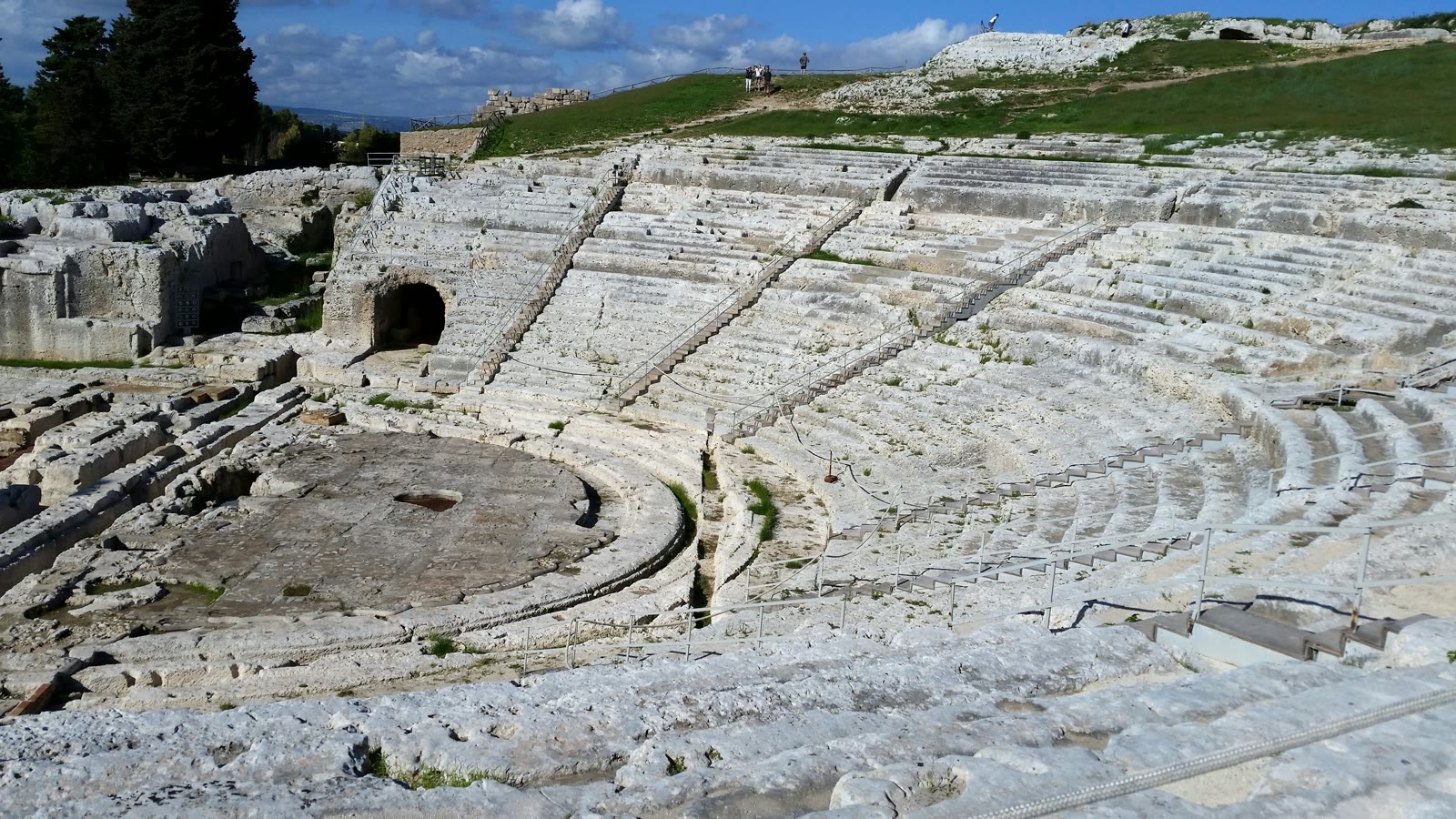
Syracuse (Siracusa) sits on Sicily’s Ionian coast, a city where 2,700 years of history are stacked in visible layers: Greek temples inside Baroque cathedrals, Roman amphitheatres next to medieval castles, and Arab-Norman fortifications overlooking streets filled with seafood restaurants. Once the largest city in the ancient Greek world, larger even than Athens, Syracuse today is a UNESCO World Heritage site that combines some of Italy’s finest archaeological ruins with the walkable, atmospheric island of Ortigia. The city has a classic Mediterranean climate with hot, dry summers and mild winters, making it a year-round destination that peaks between May and October.
Syracuse Weather at a Glance
Syracuse enjoys a Mediterranean climate (Koppen Csa) with an average annual temperature of 18.3°C (64.9°F) and about 550mm of rainfall concentrated almost entirely between October and March. Summers are hot and virtually rainless: July and August average 32°C (90°F) highs with near-zero rainfall. The Ionian Sea moderates coastal temperatures, so sea breezes keep Ortigia more comfortable than inland Sicily. Winters are mild by European standards, with January highs of 15°C (59°F) and lows of 7°C (45°F), but this is when most of the year’s rain falls. Sea temperatures peak at 26°C (79°F) in August and drop to 15°C (59°F) in February. For detailed monthly data including rainfall, sunshine hours, and sea temperatures, see the Syracuse weather by month guide.
Seasonal Snapshot
Spring (March to May): March starts cool (highs 17°C / 63°F) with decreasing rain. By May, highs reach 24°C (75°F) with only 18mm of rain and 9 hours of daily sunshine. Wildflowers bloom across the archaeological sites. The Greek Theatre Festival begins in mid-May. This is arguably the best season for sightseeing.
Summer (June to August): Hot and bone-dry. July and August see highs of 32°C (90°F) and near-zero rainfall. The sea warms to 25-26°C (77-79°F). Peak tourist season with maximum prices. The theatre festival runs through mid-July. Sightseeing between 12:00 and 16:00 is uncomfortable; plan indoor museum visits or beach time during those hours.
Autumn (September to November): September is nearly perfect: 28°C (82°F) highs, warm sea at 24°C (75°F), and thinning crowds. October remains pleasant through mid-month, then rain increases sharply. November is the second-wettest month (80mm) with few tourists, making it the best month for bargain accommodation.
Winter (December to February): Mild days (15-16°C / 59-61°F), cool nights, and the year’s heaviest rain (73-85mm per month). The Feast of Santa Lucia on December 13 brings a brief surge of visitors. January and February are the quietest months with the lowest hotel rates. Some beach-focused businesses close for the season.
Explore Syracuse
- Syracuse Weather by Month , Complete monthly climate data with temperatures, rainfall, sunshine hours, and Ionian Sea temperatures to help you pick the right dates.
- Best Time to Visit Syracuse , Seasonal breakdown covering weather, crowds, prices, and events, with specific date recommendations for every type of traveler.
- Things to Do in Syracuse , The essential sights: Greek Theatre, Ortigia’s Baroque streets, Caravaggio paintings, archaeological parks, and day trips to Noto and Catania.
- Events and Festivals in Syracuse , Annual calendar: Greek Theatre Festival (May to July), Feast of Santa Lucia (December 13), Ortigia Film Festival, Easter processions, and more.
- Best Neighborhoods in Syracuse , Ortigia, the archaeological area, mainland districts, and beach suburbs: which area suits your travel style.
- Where to Stay in Syracuse , Curated hotel recommendations across Ortigia, the mainland, and beach areas, with options for every budget.
- Syracuse Travel Tips and FAQ , Airport transport, getting around, safety, tipping, language tips, and answers to the most common visitor questions.
Quick Facts
Best months for beach swimming: July, August, September (sea temperatures 24-26°C / 75-79°F)
Warmest month: July and August (average high 32°C / 90°F)
Coolest month: January (average high 15°C / 59°F)
Wettest month: December (85mm / 3.3 inches)
Driest month: July (3mm / 0.1 inches)
Annual sunshine hours: Approximately 2,700 hours
Nearest airport: Catania-Fontanarossa (CTA), 50km north
Time zone: Central European Time (CET), UTC+1 (UTC+2 in summer)
Currency: Euro (EUR)
Language: Italian, with Sicilian widely spoken
UNESCO status: Syracuse and the Rocky Necropolis of Pantalica, inscribed 2005
Where Is Syracuse?
Syracuse sits on the southeastern coast of Sicily, the largest island in the Mediterranean, about 50km (31 miles) south of Catania and 280km (174 miles) southeast of Palermo. The historic centre occupies two areas: Ortigia island, connected to the mainland by two short bridges, and the mainland archaeological zone surrounding the Neapolis Park. The city faces the Ionian Sea to the east, with the Great Harbour (Porto Grande) to the west of Ortigia. Mount Etna, Europe’s most active volcano, rises 60km to the north and is visible from Ortigia’s rooftops on clear days. The Hyblaean Mountains (Monti Iblei) form the hinterland to the west, a limestone plateau of deep gorges, ancient necropolises, and Baroque hill towns including Noto, Modica, and Ragusa.
What Influences Syracuse’s Weather?
Three factors shape Syracuse’s climate. The Mediterranean Sea (specifically the Ionian Sea to the east) moderates temperatures year-round, keeping winters 3-5°C warmer than inland Sicily and summers 2-3°C cooler than the island’s interior. The Scirocco, a hot, dry wind from the Sahara, occasionally blows across Syracuse in spring and autumn, raising temperatures by 5-8°C for 1-3 days and depositing fine Saharan dust. These events happen 5-10 times per year, most commonly in March-April and October. Mount Etna’s presence 60km to the north has a minor influence: occasional ash plumes from eruptions can drift south toward Syracuse, though significant ashfall in the city is rare (the last notable event was in 2002). The Hyblaean Mountains to the west create a modest rain-shadow effect; Syracuse receives about 20% less annual rainfall than Palermo on the north coast.
Suggested Hotels in Syracuse
These three hotels on Ortigia island cover luxury, mid-range, and budget price points. For a complete guide with area-by-area recommendations, see the where to stay in Syracuse article.
Grand Hotel Ortigia
The only full-service luxury hotel on Ortigia, occupying a prime waterfront position next to the main harbour. Features include a rooftop terrace, glass elevator with sea views, private parking (a rarity on Ortigia), and spa facilities. Rooms blend antique furnishings with modern bathrooms. Best for travelers seeking a complete hotel experience in the heart of the historic centre. Check rates and availability
Domus Mariae Albergo
A 3-star property with a 4-star feel, sitting directly on Ortigia’s seafront with a large rooftop terrace overlooking the Mediterranean. Run by the Ursuline Sisters, the hotel offers a wellness centre and simple, clean, well-maintained rooms. Best for travelers seeking excellent value in a prime waterfront location without paying luxury prices. Check rates and availability
B&B Mirabella Rooms Ortigia
A small, modern B&B in a restored building a 5-minute walk from Piazza Duomo. Air-conditioned rooms with free Wi-Fi and an Italian breakfast included. The quality-to-price ratio is among the best on Ortigia. Best for budget-conscious travelers who refuse to compromise on staying in the historic centre. Check rates and availability
