

 Overcast
  Sunny
Sunny This post may contain affiliate links. If you purchase through them, I may earn a small commission at no extra cost to you. Thanks for supporting our small business.
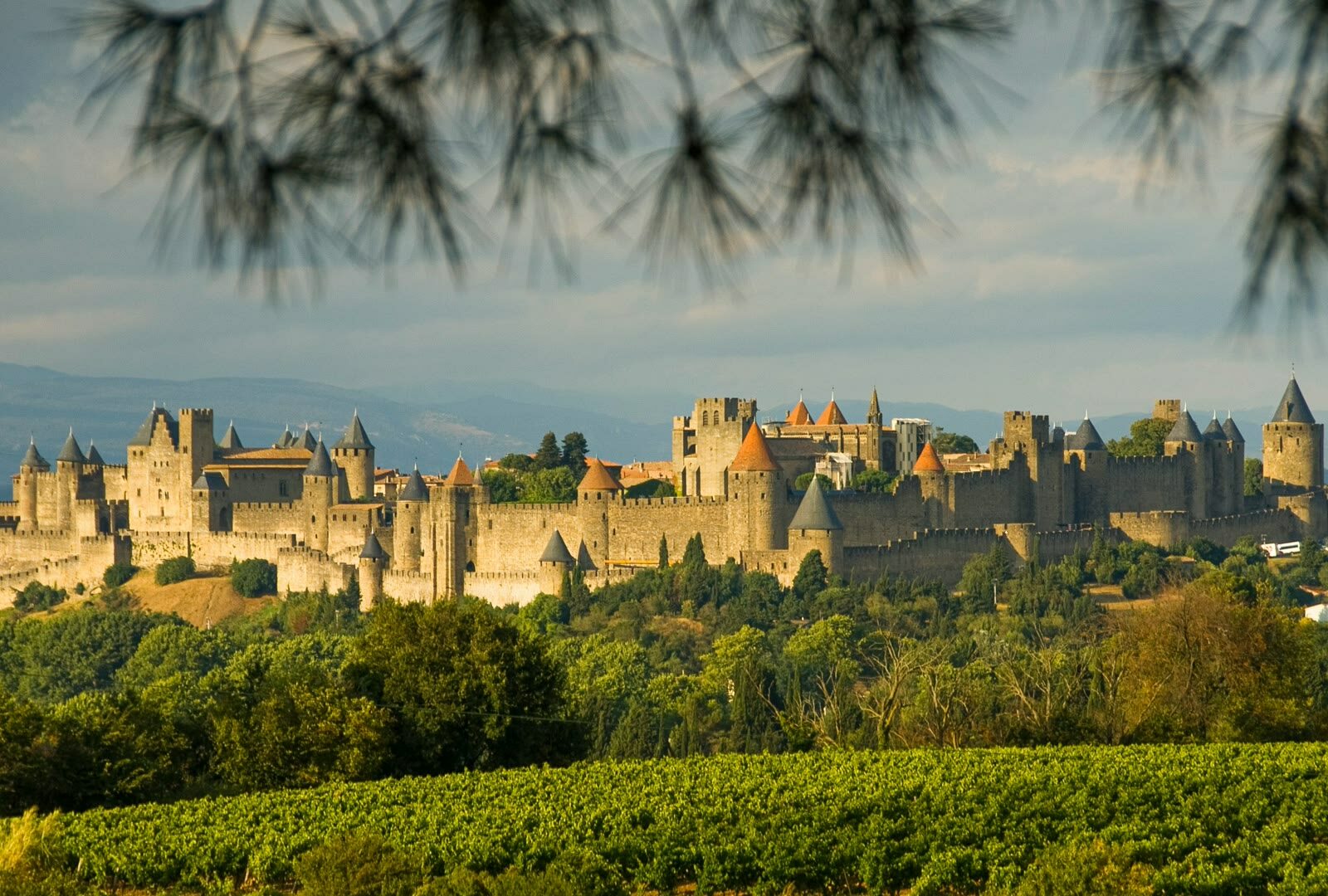
Carcassonne is a fortified medieval city in the Occitanie region of southern France, 80km inland from the Mediterranean and 90km southeast of Toulouse. Its double-walled citadel, La Cite, is a UNESCO World Heritage site that attracts 4 million visitors a year, making it one of the most visited monuments in France after the Eiffel Tower and Mont Saint-Michel. The city has a warm Mediterranean climate with hot summers and mild winters, averaging 2,100 hours of sunshine annually. Use this guide to plan your visit: from the Carcassonne weather by month breakdown to the best neighbourhoods and hotels.
Carcassonne Weather at a Glance
Carcassonne has a Mediterranean climate (Koppen Cfa) with warm to hot summers and cool, wet winters. July is the hottest month averaging 29°C (84°F) daytime and 18°C (64°F) overnight, while January is the coldest at 9°C (48°F) high and 3°C (37°F) low. Rainfall totals about 650mm per year, spread across 100 to 110 rain days, with October the wettest month (75mm) and July the driest (25mm). Snow is rare in the city but frost appears on 15 to 20 mornings per winter. The Tramontane wind can blow strongly through the Aude valley, especially in spring. For a full month-by-month breakdown, see our Carcassonne weather by month guide.
Seasonal Snapshot
- Spring (March to May): Temperatures climb from 14°C to 21°C with 6 to 8 hours of daily sun. The countryside turns green and wildflowers appear. Hotel rates are 15 to 25 percent below summer. The Feria de Carcassonne brings Spanish-style street partying in late May.
- Summer (June to August): Hot and dry with 26 to 29°C highs and 9 to 10 hours of daily sun. The Festival de Carcassonne runs late June to early August. Bastille Day (July 14) brings the massive Embrasement fireworks display drawing 700,000 spectators. Peak crowds and hotel prices in July and August.
- Autumn (September to November): September is excellent with 24°C and fewer crowds after the first week. October is the wettest month (75mm) but 19°C temperatures remain pleasant. The grape harvest runs through September and October. November is the quietest and cheapest month but cool at 13°C with frequent rain.
- Winter (December to February): Cool and damp with 9 to 11°C highs and 4 to 5 hours of daily sun. The Christmas market brightens Place Carnot in December. Hotel rates are at their lowest, 50 to 60 percent below summer peaks. Frost appears on 5 to 6 mornings per month.
Carcassonne Travel Guides
- Carcassonne Weather by Month: Detailed month-by-month breakdown of temperatures, rainfall, sunshine hours, and what to pack for each season. Includes a quick-reference climate table.
- Best Time to Visit Carcassonne: When to go for the best weather, lowest prices, fewest crowds, and specific events. Covers each season and the cheapest months to book.
- Things to Do in Carcassonne: From the Chateau Comtal and rampart walk to Canal du Midi boat trips, wine tasting, cassoulet, and Lac de la Cavayere for families.
- Carcassonne Events and Festivals: The Festival de Carcassonne, Bastille Day fireworks, Medievales de la Cite, Christmas market, Feria, and the cassoulet festival.
- Best Neighborhoods in Carcassonne: Compare La Cite Medievale, Bastide Saint-Louis, Trivalle, the station area, and the vineyard countryside.
- Where to Stay in Carcassonne: Hotel recommendations for every budget across all neighbourhoods.
- Carcassonne Travel Tips and FAQ: Airport and train access, getting around, tipping, safety, language tips, day trip ideas, and answers to common visitor questions.
Quick Facts
- Best months to visit: May, June, and September.
- Warmest months: July and August average 29°C (84°F).
- Coolest months: January averages 9°C (48°F) high.
- Wettest month: October at 75mm over 10 rain days.
- Driest month: July at 25mm over 5 rain days.
- Sunniest months: July with 10 hours of daily sunshine.
- Annual sunshine: 2,100 hours.
- Nearest beach: Mediterranean at Gruissan, 55km east (45 min by car).
- Airport: Carcassonne Airport (CCF), 3km west, Ryanair from UK/Ireland/Belgium.
- Train: Direct TGV from Paris (5.5 hrs), Toulouse (45 min).
Location and Climate Influences
Carcassonne sits on a hilltop overlooking the Aude River in the Languedoc plain, 110 metres above sea level. The city is 80km from the Mediterranean coast and 55km from the Pyrenees foothills. Its climate reflects this intermediate position: Mediterranean heat and dryness dominate in summer, but the inland location means cooler winter nights than on the coast and autumn rainfall from Atlantic weather systems that cross southern France. The Aude valley channels the Tramontane wind, a northwesterly that can reach 50 to 70 km/h in spring, clearing the sky but making outdoor dining chilly.
Suggested Hotels in Carcassonne
Hotel de la Cite Carcassonne – MGallery Collection
A 5-star neo-Gothic masterpiece set inside the medieval Cite walls with 59 rooms, a Michelin-starred restaurant (La Barbacane), outdoor pool, and spa. Best for couples celebrating a special occasion. Check rates and availability
Hotel Du Pont Vieux
A 3-star hotel in an 18th-century building at the foot of the Cite with rooms offering direct views of the castle ramparts. The garden terrace and 24-hour reception make it a reliable mid-range choice. Best for couples and independent travellers. Check rates and availability
ibis budget Carcassonne La Cite
A basic budget hotel 15 minutes on foot from the Cite with free WiFi, free parking, and an optional breakfast buffet at 7 EUR. Best for budget travellers and road-trippers. Check rates and availability
