

 Overcast
  Sunny
Sunny  Partly Cloudy
 This post may contain affiliate links. If you purchase through them, I may earn a small commission at no extra cost to you. Thanks for supporting our small business.
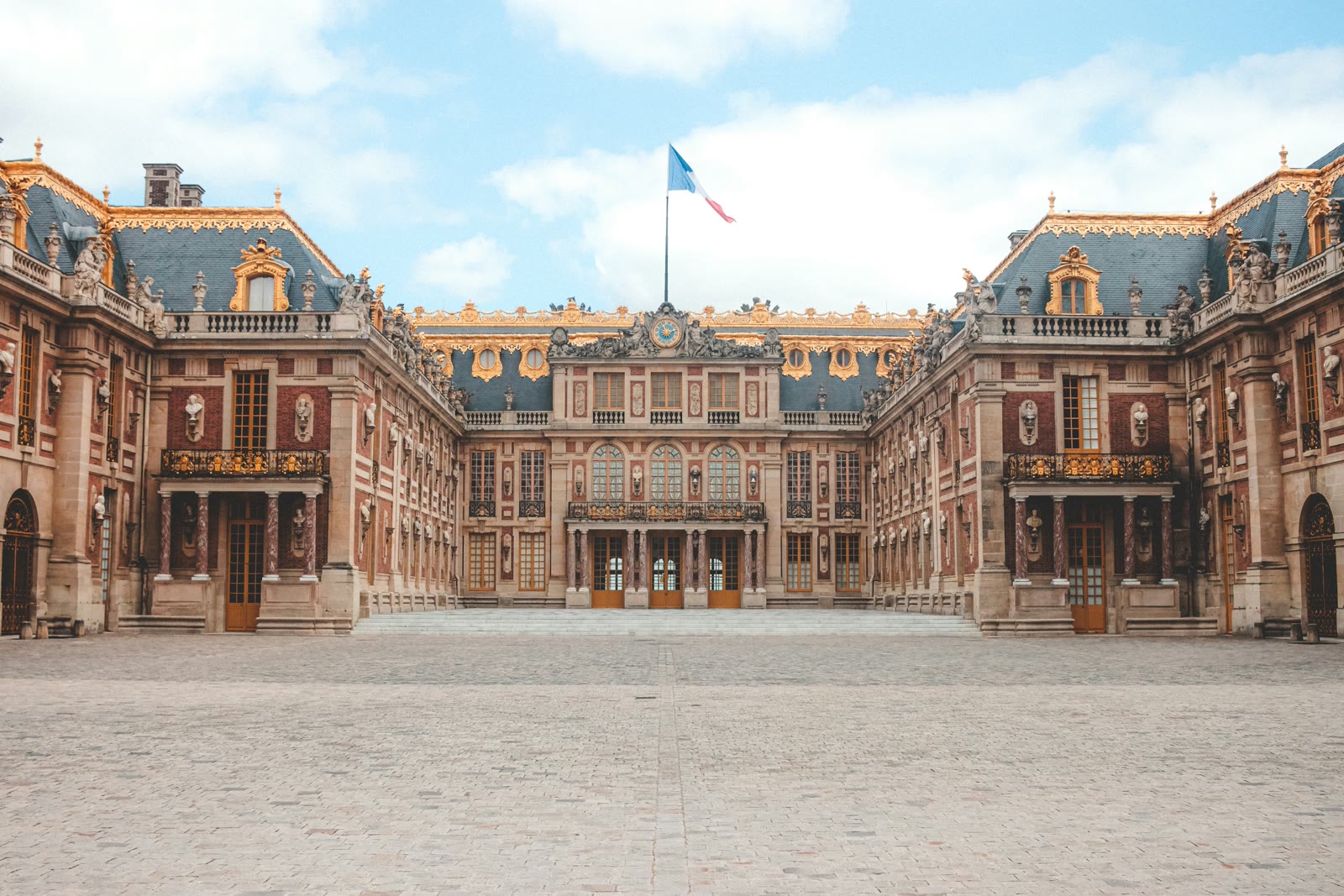
Versailles, 20 km southwest of central Paris, is one of the most visited destinations in France outside the capital. The UNESCO-listed Palace of Versailles and its 800-hectare estate of formal gardens, fountains, and royal apartments draw over 8 million visitors annually. But the town of Versailles itself, with a population of 85,000, has a distinct identity beyond the palace gates: three walkable neighborhoods, a daily covered market, and streets laid out under Louis XIV that still follow their original 17th-century plan. This guide covers Versailles weather, the best time to visit, where to stay, and everything worth doing in and around the chateau.
Welcome to Versailles: A Town Built for a King
Louis XIV moved his court from Paris to Versailles in 1682, transforming a hunting lodge into the largest palace in Europe and building an entire town to house the courtiers, servants, and merchants who made the palace function. The grid of streets east of the chateau, laid out between 1671 and 1720, remains the core of Versailles today. The Avenue de Paris runs arrow-straight from the palace gates toward the capital, and the three grand boulevards radiating from the Place d’Armes form the town’s central axis. Modern Versailles is an affluent suburb of Paris with good train connections (RER C, 35 minutes from central Paris), a strong local food scene centered on the Marché Notre-Dame, and a calmer pace than the capital. It makes both an easy day trip and a practical base for exploring Paris at lower hotel prices.
Versailles Weather at a Glance
Versailles has an oceanic climate with mild summers and cool winters. July and August are warmest, averaging 25°C (77°F) highs and 15°C (59°F) lows, with 7 to 8 hours of sunshine per day. January is coldest at 7°C (45°F) highs and 2°C (36°F) lows. Annual rainfall averages 640 mm, spread evenly across the year with May and October tied as the wettest months at 62 mm each. Snow falls 2 to 4 days per winter on average. The palace gardens operate seasonally: fountains run from late March to late October, and the Musical Fountains Show and Night Fountains run on weekends in that period. For detailed month-by-month data, see our Versailles weather by month guide.
Versailles Seasonal Snapshot
- Spring (March to May): Gardens bloom with daffodils and tulips, fountains activate on weekends from late March, and temperatures climb from 12°C (54°F) to 19°C (66°F). The Musical Fountains Show begins. Crowds build through April and spike during Easter weekend. May is the single best month for weather, garden beauty, and manageable crowds.
- Summer (June to August): Peak season with 25°C (77°F) highs, the longest days, and the Fountains Night Show on Saturday evenings with fireworks over the Grand Canal. The Hall of Mirrors is packed from 10:30 AM onward. Open at 9:00 AM to beat the worst crowds and heat.
- Autumn (September to November): September stays warm at 21°C (70°F) with thinning crowds after the first week. October brings autumn color to the gardens and rain picks up to 62 mm. November is cool (10°C/50°F), fountains shut off, and the palace feels nearly empty on weekdays.
- Winter (December to February): Cold and quiet. January highs reach only 7°C (45°F). Fountains are off, garden statues covered, but palace queues are shortest and hotel rates drop 30 to 50 percent from summer. Christmas decorations and a small market add festive appeal in December. The palace closes every Monday year-round and on January 1, May 1, and December 25.
Versailles Travel Guides
These guides cover everything you need to plan a trip to Versailles, from monthly weather data to neighborhood hotel recommendations:
- Versailles Weather by Month — Monthly temperatures, rainfall in mm, sunshine hours, and what the palace gardens look like in each season.
- Best Time to Visit Versailles — Specific date ranges for the best weather, lowest crowds, best prices, and signature events like the Fountains Night Show.
- Things to Do in Versailles — Beyond the Hall of Mirrors: the Grand and Petit Trianon, Marie Antoinette’s hamlet, the King’s Kitchen Garden, the Lambinet Museum, and day trips.
- Versailles Events and Festivals — Musical Fountains Show, Fountains Night Show, Royal Serenade, Christmas market, Versailles Jazz Festival, and seasonal celebrations.
- Best Neighborhoods in Versailles — Notre-Dame, Saint-Louis, and Chantiers compared for atmosphere, restaurant access, walkability, and hotel prices.
- Where to Stay in Versailles — Hotel recommendations for luxury, mid-range, and budget travelers in all three neighborhoods, with Booking.com links.
- Versailles Travel Tips and FAQ — Train routes from Paris, ticket types and prices (2026), opening hours, where to eat, money tips, safety, and accessibility information.
Where Is Versailles and What Influences Its Weather?
Versailles sits in the Île-de-France region at 48.8°N latitude, on a gently sloping plateau at an elevation of 130 meters above sea level. The Seine River flows 10 km to the east, too far to moderate the climate directly. The town’s inland position and latitude produce an oceanic climate with four distinct seasons, no dry season, and winter lows that dip below freezing an average of 25 nights per year. The prevailing westerly winds bring Atlantic moisture, which is why rainfall is spread evenly year-round rather than concentrated in a wet season. The palace gardens’ 200,000 trees create microclimates: the shaded groves feel noticeably cooler than the open Grand Canal terrace in summer, and the Orangerie’s south-facing position shelters citrus trees that have wintered outdoors here since the 1680s.
Versailles Quick Facts
- Best months for garden visits: May, June, September
- Warmest months: July and August (both average 25°C / 77°F highs)
- Coldest month: January (7°C / 45°F high, 2°C / 36°F low)
- Wettest months: May and October (62 mm each)
- Driest month: February (44 mm)
- Sunniest months: July (221 hours), August (212 hours)
- Annual rainfall: 640 mm spread evenly across the year
- Snow days per year: 2 to 4 on average
- Fountains operating: Late March to late October (weekends and select Tuesdays)
- Palace closed: Mondays, January 1, May 1, December 25
- Train from Paris: RER C, 35 minutes, €4.95 one way
- Passport ticket (2026): €21.50 (palace, Trianon, gardens on show days)
Suggested Hotels in Versailles
These three hotels, all within walking distance or a short bus ride of the palace, cover luxury, mid-range, and budget options. For area-by-area recommendations and more choices, read our full where to stay in Versailles guide.
Waldorf Astoria Versailles – Trianon Palace
A five-star property bordering the Chateau park with a Guerlain spa and heated indoor pool, a Michelin-starred Gordon Ramsay restaurant, and rooms overlooking either the palace gardens or the hotel’s formal French garden. The palace gates are a 3-minute walk through the park. Best for couples and luxury travelers. Check rates and availability
Le Louis Hotel Versailles Chateau – MGallery
A four-star hotel at 2 bis Avenue de Paris, a 4-minute walk from the palace gates, with 152 renovated rooms featuring marble bathrooms and Nespresso machines, plus a stylish cocktail bar that stays open until midnight. Best for travelers wanting a central full-service hotel at moderate prices. Check rates and availability
ibis budget Versailles Chateau Saint Cyr
A budget chain hotel 3 km from the palace in Saint-Cyr-l’Ecole, reachable by a 10-minute bus ride. Compact functional rooms for up to three people, free parking, 24-hour reception, and breakfast available for €7.50. Best for budget travelers and road-trippers. Check rates and availability
