

 Overcast
  Patchy rain nearby
  Sunny
Sunny This post may contain affiliate links. If you purchase through them, I may earn a small commission at no extra cost to you. Thanks for supporting our small business.
New Orleans, Louisiana, is a port city on the Mississippi River with a humid subtropical climate, roughly 365,000 residents and one of the busiest festival calendars in the United States. It sits between the river and Lake Pontchartrain at near sea level, which shapes everything from its weather to its famous above-ground cemeteries. This guide collects the city’s climate data and links to seven in-depth articles on planning a trip, from the weather by month to where to stay.
Welcome to New Orleans
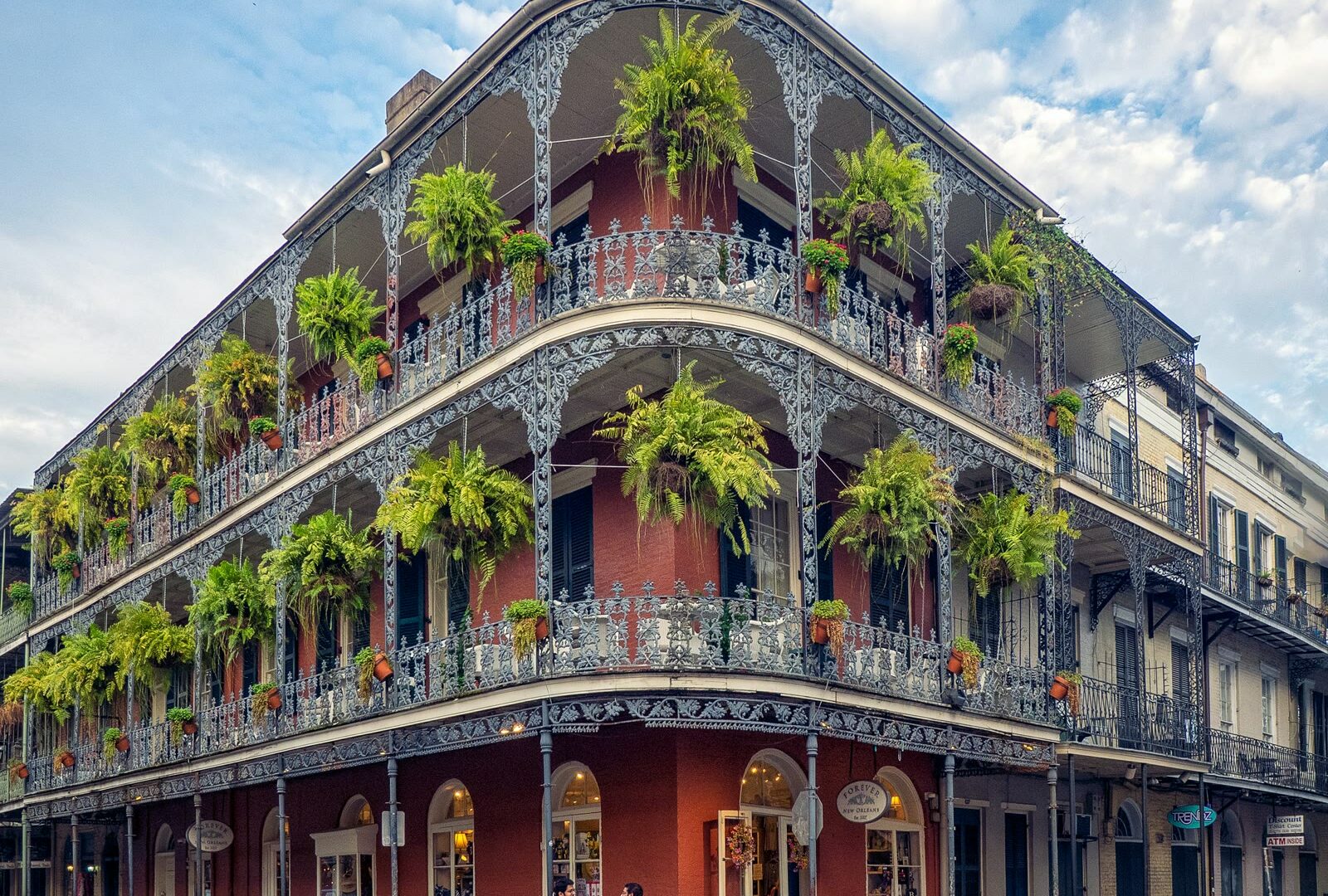
Founded by the French in 1718 and passed to Spain and back before the Louisiana Purchase of 1803, New Orleans is a port town that grew rich on cotton, sugar and the river trade. Today the French Quarter, Garden District mansions and the brass bands of Treme pull in about 18 million visitors a year. It is a city best taken slowly: a streetcar ride up St. Charles Avenue, a beignet at Cafe du Monde and a jazz set on Frenchmen Street will tell you more than any itinerary.
New Orleans Weather at a Glance
New Orleans has hot, humid summers and short, mild winters, with 1,616 mm (63.6 inches) of rain a year. January is the coolest month at 17°C (63°F) by day and 7°C (45°F) at night, while July and August peak at 33°C (91°F) with 24°C (75°F) lows. Rain falls most heavily from June through September in fast afternoon thunderstorms.
The city’s defining weather fact is humidity, which stays near 60 to 75 percent year round, and its hurricane season, which runs June 1 to November 30 and peaks from late August to early October. Spring and fall offer the most comfortable balance of warm days and lighter rain, which is why the festival season clusters there.
New Orleans Seasonal Snapshot
- Winter (December to February): mild days, cool nights, and the Reveillon dinners plus Mardi Gras build-up from January.
- Spring (March to May): the sweet spot, with French Quarter Festival and Jazz Fest under comfortable skies.
- Summer (June to August): hot and stormy, but the lowest hotel rates and the Essence Festival in July.
- Fall (September to November): hurricane season fades into a drier, cooler October and the Voodoo festival at Halloween.
Plan Your Trip: New Orleans Guides
- New Orleans Weather by Month: monthly temperatures, rainfall in mm and hurricane-season dates.
- Best Time to Visit New Orleans: the exact windows for festivals, good weather and lower prices.
- Things to Do in New Orleans: the French Quarter, WWII Museum, swamp tours and live music, with hours and prices.
- New Orleans Events and Festivals: Mardi Gras, Jazz Fest, French Quarter Fest and more, with dates.
- New Orleans Neighborhoods: French Quarter, Garden District, Marigny, Bywater and Treme explained.
- Where to Stay in New Orleans: the best areas and specific hotels for every budget.
- New Orleans Travel Tips: airport transport, streetcar costs, tipping and safety, plus an FAQ.
Where Is New Orleans?
New Orleans sits in southeastern Louisiana on the east bank of the Mississippi River, about 130 km (80 miles) from the Gulf of Mexico. Lake Pontchartrain borders it to the north, and much of the city lies at or below sea level, protected by a system of levees and pumps that dates to the early 20th century. Louis Armstrong New Orleans International Airport (MSY) is 24 km (15 miles) west in Kenner.
New Orleans Quick Facts
- Warmest months: July and August at 33°C (91°F) average highs.
- Coolest month: January at 17°C (63°F) high and 7°C (45°F) low.
- Wettest months: July and August at 168 to 171 mm of rain.
- Driest month: October at 100 mm.
- Hurricane season: June 1 to November 30, peaking late August to early October.
- Airport: Louis Armstrong New Orleans International Airport (MSY), 24 km west of downtown.
- Streetcar fare: US$1.25 a ride or US$3 for a one-day Jazzy Pass.
- Best weather window: late February to early May and October to November.
Where to Stay in New Orleans
The French Quarter suits first visits and walking access, the Central Business District offers bigger rooms for slightly less, and the Garden District is the quiet residential choice on the streetcar line. Our full where to stay in New Orleans guide breaks down each area with specific hotels at three price points.
Suggested Hotels in New Orleans
The Roosevelt New Orleans
An 1893 grand hotel on Roosevelt Way operated by Waldorf Astoria, home to the Sazerac Bar, a rooftop pool and the Blue Room jazz venue. Best for luxury travelers and special occasions. Check rates and availability
Hotel Monteleone
A family-run 1886 landmark at 214 Royal Street with the revolving Carousel Bar and the Criollo restaurant, one block from Bourbon Street. Best for first-time visitors who want a historic stay. Check rates and availability
Place d’Armes Hotel
A French Quarter hotel at 625 St. Ann Street with exposed-brick rooms, a courtyard and a pool, five minutes from Jackson Square. Best for budget-conscious travelers. Check rates and availability
