
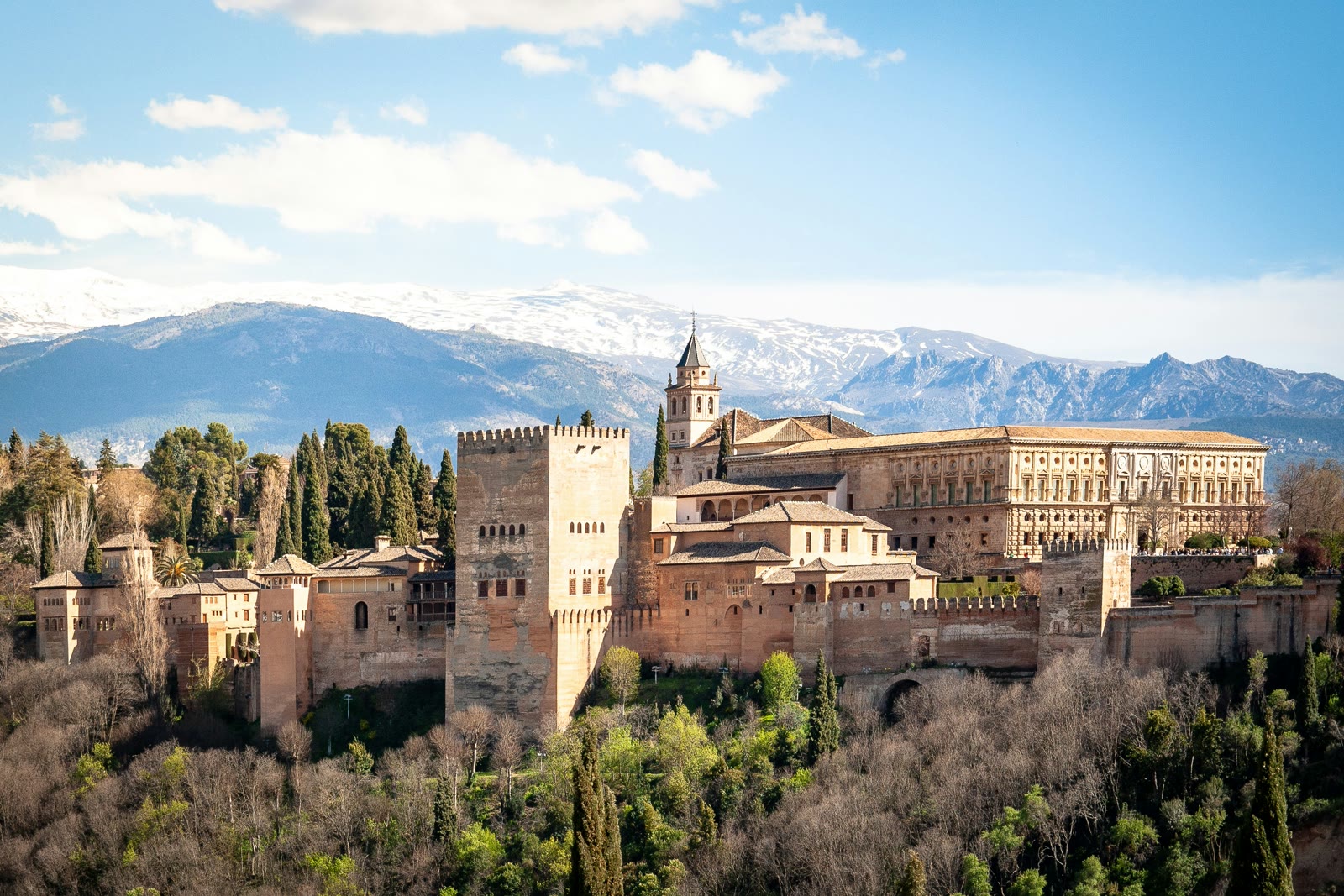

Granada sits at 738 meters (2,421 feet) at the foot of the Sierra Nevada mountains in Andalusia, southern Spain, with a Mediterranean-continental climate that produces cold winters and hot, dry summers. July and August average 34°C (93°F) with virtually no rain (3-5mm/month, 1 rain day). Winters drop to 1-2°C (34-36°F) overnight with 12-14°C (54-57°F) daytime highs and 6-7 rain days monthly.
The city receives just 365mm (14.4 inches) of rain annually, concentrated in November (55mm) and December (50mm). This climate, combined with the Sierra Nevada ski resort 32km away (operating November-May), makes Granada one of the few places where you can ski in the morning and explore Moorish palaces in the afternoon.
The Alhambra – the best-preserved Islamic medieval palace complex in the world – defines the city, drawing 2.7 million visitors annually. The UNESCO-listed Albaicín quarter, flamenco cave shows in Sacromonte, and a free-tapa-with-every-drink culture round out a destination that rewards planning, especially for Alhambra tickets.
Welcome to Granada
Granada was the last Muslim kingdom in Spain, falling to the Catholic Monarchs in 1492, and the layered history is visible everywhere. The Alhambra’s Nasrid Palaces contain some of the finest Islamic geometric art in existence. The Albaicín’s whitewashed streets preserve the medieval Moorish urban plan.
The Cathedral and Royal Chapel hold the tombs of Ferdinand and Isabella, who commissioned Columbus’s voyage from a camp outside Granada’s walls. The city’s tapas culture – a free small plate with every drink ordered (EUR 2.00-2.50) – is one of the last strongholds of this tradition in Spain. Calle Navas, Calle Elvira, and Campo del Príncipe are the primary tapas streets. The university (founded 1531) gives the city a young, budget-friendly energy that balances the tourist crowds at the Alhambra.
Granada Climate and Seasons
Summer (June-September) brings 29-34°C (84-93°F) highs with minimal rain (3-16mm/month). Spring (March-May) offers the best balance: 17-24°C (63-75°F) with 5-7 rain days. Autumn (October-November) sees 22°C (72°F) in October cooling to 16°C (61°F) in November, with November the wettest month (55mm). Winter (December-February) has 12-14°C (54-57°F) days, frost at night, and occasional snow in the city.
The Sierra Nevada ski season runs November through April. For detailed monthly data including humidity, sunshine hours, and a comparison table, see our Granada weather by month guide.
Best Time to Visit Granada
April through May and late September through October deliver the best weather-crowd balance. Avoid July-August for extreme heat (34°C/93°F) and peak Alhambra crowds. Winter offers the easiest Alhambra tickets and lowest prices but cold, wet conditions.
Semana Santa (Easter week) is spectacular but requires booking 4-6 months ahead. For month-by-month analysis including festival dates and crowd patterns, read our best time to visit Granada article.
Things to Do in Granada
The Alhambra (EUR 19.09, book 3 months ahead at tickets.alhambra-patronato.es) is non-negotiable. Beyond it: the Albaicín’s miradors for sunset Alhambra views, Sacromonte’s cave flamenco shows (EUR 22-30), the Cathedral and Royal Chapel (EUR 6 each), and the free-tapa bar crawl on Calle Navas and Calle Elvira.
The Sierra Nevada offers skiing November-April and hiking May-October. For ticket strategies, opening hours, and logistics, see our things to do in Granada guide.
Granada Neighborhoods
The Centro (flat, commercial, convenient) anchors the city. The Albaicín (steep, whitewashed, UNESCO-listed) provides atmosphere and Alhambra views. Sacromonte (cave houses, flamenco, rustic) is the most unique. The Realejo (former Jewish quarter, food-focused, local vibe) offers the best tapas scene without tourist crowds.
The university district (south, student-priced) is the most affordable. Each area suits different budgets and mobility levels. See our Granada neighborhoods guide for detailed area descriptions.
Where to Stay in Granada
Accommodation ranges from EUR 40 budget rooms to EUR 250+ at the Parador inside the Alhambra. The Centro offers the most hotels. The Albaicín has boutique guesthouses with Alhambra-view terraces. Sacromonte has cave houses. For specific hotel recommendations by area with verified Booking.com links, see our where to stay in Granada guide.
Suggested Hotels in Granada
Parador de Granada
A luxury parador inside the Alhambra grounds in a converted 15th-century convent, with after-hours monument access and courtyard dining. Best for travelers seeking the ultimate Alhambra experience (book 6-12 months in advance). Check rates and availability
Hotel Palacio de Santa Inés
A mid-range boutique hotel in a restored 16th-century Mudéjar palace near Plaza Nueva, with original frescoes and a courtyard cafe. Best for travelers who want historic character at a mid-range price between the Cathedral and the Albaicín. Check rates and availability
OYO Hotel El Zaguan
A budget hotel with clean rooms from EUR 40, a quiet courtyard, and a 5-minute walk to the Cathedral. Best for budget-conscious travelers who want a private room in the center. Check rates and availability
Granada Events and Festivals
Semana Santa (Easter week) features Spain’s most dramatic religious processions. Corpus Christi Fair (June) brings a week of casetas, bullfights, and flamenco. The International Festival of Music and Dance (June-July) programs classical and flamenco in the Alhambra. For full dates and details, see our Granada events and festivals guide.
Granada Travel Tips
Granada Airport (GRX) is 17km away (EUR 3 bus, EUR 28-32 taxi). Málaga Airport (AGP, 130km) has more international flights. Alhambra tickets (EUR 19.09) must be booked months ahead. The city is walkable but steep; wear good shoes. Tap water from Sierra Nevada snowmelt is excellent. Schengen visa rules apply. For full practical information, read our Granada travel tips and FAQ.
City Articles
Best Time to Visit Granada
The best time to visit Granada is April through May and late September through October. April-May delivers temperatures of 19-24°C (67-75°F), the Alhambra’s gardens at peak bloom manageable crowds before summer. September-October offers 22-29°C (72-84°F) with fewer tourists than summer and warm enough evenings for terrace dining in the Albaicín. The worst months are July-August: […]
Read MoreGranada Events and Festivals
Granada’s festival calendar peaks at two moments: Semana Santa (Holy Week, March or April) with Spain’s most dramatic religious processions, and the Feria del Corpus Christi (June) with a week of bullfights, flamenco, and carnival rides. The city also runs a major international music and dance festival in the Alhambra each summer, and the Cruces […]
Read MoreGranada Neighborhoods
Granada’s neighborhoods divide along a hill that rises from the flat city center to the Alhambra on one side and the Albaicín and Sacromonte on the other. The city center (Centro) around Gran Vía and Plaza Nueva is the commercial and transport hub. The Realejo (south of the Alhambra) is the old Jewish quarter now […]
Read MoreGranada Travel Tips and FAQ
Practical information for visiting Granada: airport transport options, Alhambra ticket strategy, getting around the hilly city, visa requirements, money and tipping, safety advice, and answers to common questions from first-time visitors to Andalusia’s most popular destination. Granada Airport and Arrival Information Federico García Lorca Granada-Jaén Airport (GRX) is 17km west of the city, a 20-25 […]
Read MoreGranada Weather by Month
Granada has a Mediterranean-continental climate (Köppen Csa/Cfa transition) shaped by its elevation of 738 meters (2,421 feet) at the foot of the Sierra Nevada mountains. This altitude produces colder winters and milder summers than coastal Andalusia. Annual rainfall averages just 365mm (14.4 inches), one of Spain’s driest cities. Rain concentrates in late autumn and early […]
Read MoreThings to Do in Granada
Granada is defined by the Alhambra, the best-preserved Islamic medieval palace complex in the world and Spain’s most visited monument (2.7 million tickets annually). Beyond the Alhambra, the city offers the winding whitewashed streets of the Albaicín (a UNESCO World Heritage district), the Sacromonte cave houses with flamenco performances, a unique free-tapa culture with every […]
Read MoreWhere to Stay in Granada
Granada offers distinctive accommodation types you won’t find elsewhere: cave houses in Sacromonte and cármenes (traditional walled-garden houses) in the Albaicín. The city center (Centro) offers the most convenience. The Albaicín provides atmosphere and Alhambra views at the cost of steep streets. The Realejo offers a balanced local experience. Hotel prices range from EUR 40 […]
Read More