

 Overcast
  Light rain shower
  Sunny
Sunny This post may contain affiliate links. If you purchase through them, I may earn a small commission at no extra cost to you. Thanks for supporting our small business.
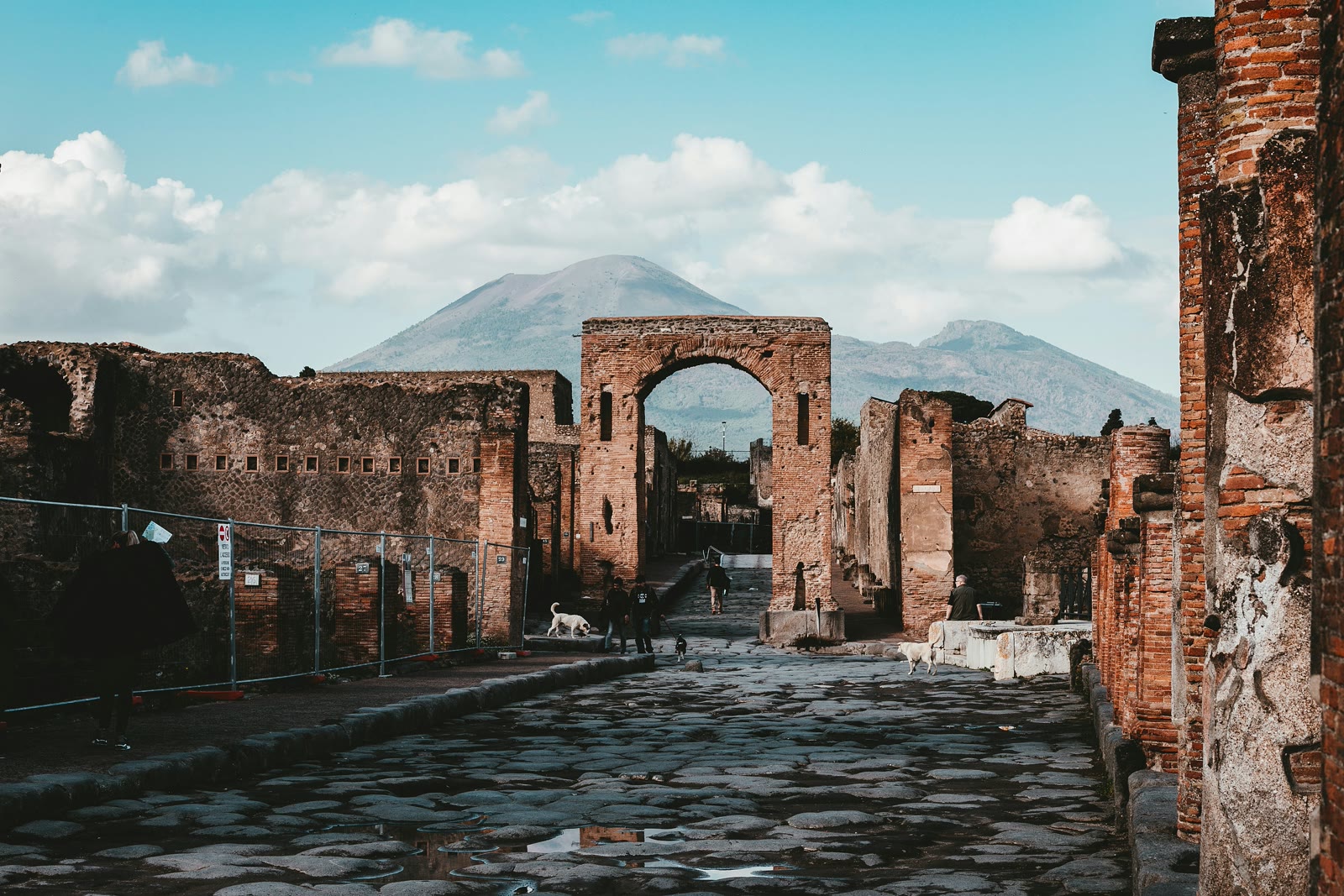
Pompeii is an ancient Roman city frozen in time by the eruption of Mount Vesuvius in 79 AD. Located in Italy’s Campania region, 25 km southeast of Naples, it is one of the world’s most significant archaeological sites and a UNESCO World Heritage destination that draws over 3 million visitors annually. The excavated ruins cover 44 hectares with streets, homes, temples, baths, and amphitheaters preserved under volcanic ash for nearly two millennia. Pompeii’s Mediterranean climate means hot, rainless summers and mild, wet winters. The best months to explore the stone-paved streets are April, May, September, and October when daytime temperatures sit between 19°C and 27°C (66-81°F) and crowds are manageable. Summer visits require careful planning because temperatures on the unshaded ruins regularly exceed 35°C (95°F).
Pompeii Climate at a Glance
The archaeological site sits on the Sarno River plain at 14 meters above sea level, with Mount Vesuvius rising to the north and the Bay of Naples 2 km to the south. This position creates a Mediterranean microclimate that is slightly warmer and more humid than coastal Naples. The stone-paved streets and brick structures of the ruins absorb and radiate heat, making the site feel 3-5°C hotter than the official air temperature in summer. There is virtually no natural shade across most of the 44-hectare excavated area. Rainfall follows a Mediterranean pattern with dry summers (2-4 rainy days per month June through August) and wet winters (11-13 rainy days per month November through January). November is the wettest month with 150mm of rainfall.
Seasonal Snapshot
- Spring (March to May): The best season for exploring Pompeii. Daytime highs climb from 16°C (61°F) in March to 24°C (75°F) in May. Rainfall decreases from 9 to 6 rainy days per month. Wildflowers bloom between the ancient stones in April. Morning visits recommended before the ruins heat up.
- Summer (June to August): Intensely hot and crowded. Average highs of 31°C (88°F) with peak afternoon readings of 36-38°C (97-100°F). Almost no rain: just 2-3 rainy days per month. The site can close early on extreme heat days. Arrive at 9:00 AM opening and plan to exit by noon. Carry 2+ liters of water.
- Autumn (September to November): September is excellent with 27°C (81°F) highs and thinning crowds. October remains comfortable at 22°C (72°F) but rainfall increases to 9 rainy days. November is the wettest month with 150mm over 13 days and slippery stone surfaces.
- Winter (December to February): Quiet and wet. January highs reach only 13°C (55°F) with 11-12 rainy days per month. Snow is extremely rare. Winter hours mean 5:00 PM closing (last entry 3:30 PM). You will often have entire sections of the ancient city to yourself on weekdays.
Explore Pompeii
We have created the following detailed guides to help you plan every aspect of your visit to Pompeii, from monthly weather data to the best neighborhoods and hotel recommendations:
- Pompeii Weather by Month A month-by-month breakdown of temperatures, rainfall, humidity, sunshine hours, and what to expect in every season at the archaeological site. Includes a detailed climate data table.
- Best Time to Visit Pompeii Specific date ranges for the best weather, lowest crowds, and cheapest prices. Covers seasonal pros and cons with data on visitor numbers and holiday dates to avoid.
- Things to Do in Pompeii The Forum, Amphitheater, Villa dei Misteri, Lupanar, House of the Faun, Antiquarium museum, Mount Vesuvius crater hike, and the Sanctuary of the Madonna. Each with practical details on location, hours, and tickets.
- Pompeii Events and Festivals The annual religious pilgrimages (May 8 Supplica and October Madonna del Rosario), the summer theater festival in the ancient ruins, grape harvest events, and Christmas traditions.
- Best Neighborhoods in Pompeii A guide to the five zones of Pompeii: the Porta Marina entrance area, town center, Santuario quarter, Villa dei Misteri area, and the Piazza Anfiteatro entrance zone. With hotel prices and who each area suits.
- Where to Stay in Pompeii Hotel recommendations near the archaeological site and in the town center. Luxury, mid-range, and budget options for the Porta Marina area and Pompei town center with Booking.com links.
- Pompeii Travel Tips and FAQ How to get there by train and car, ticket prices, what to wear at the ruins, food and water inside the site, accessibility information, safety advice, and hotel recommendations. Everything practical in one place.
Quick Facts
- Best months to visit: April, May, September, October
- Warmest months: July and August (average high 31°C / 88°F, peaks to 38°C / 100°F)
- Coolest months: January and February (average high 13°C / 55°F, low 4°C / 39°F)
- Wettest month: November (150mm / 5.9 inches, 13 rainy days)
- Sunniest months: July (11 hours/day), June and August (10 hours/day)
- Site hours: 9:00 AM to 7:00 PM (Apr-Oct), 9:00 AM to 5:00 PM (Nov-Mar)
- Entry ticket: 18 euros (adults), free first Sunday of each month
- Nearest airport: Naples International Airport (NAP), 29 km, 35 minutes by car
- Elevation: 14 meters (46 feet) above sea level
Suggested Hotels in Pompeii
Pompeii has accommodation ranging from a hotel 50 meters from the ruins entrance to family-run B&Bs in the town center. Book at least 3-4 weeks ahead for spring and autumn visits. Here are three recommended options across budget tiers:
Hotel Vittoria
The closest hotel to the Pompeii ruins entrance at just 50 meters from the Porta Marina gate. Air-conditioned rooms, rooftop terrace with Vesuvius views, and a 24-hour front desk. Best for travelers who want to be first through the gates in the morning. Check rates and availability
Hotel Diana Pompei
A modern 4-star hotel in the town center with 32 soundproofed rooms, a rooftop terrace with Vesuvius views, and a restaurant serving Neapolitan cuisine. It is 800 meters from the archaeological site. Best for mid-range travelers wanting hotel comfort with local restaurants on the doorstep. Check rates and availability
B&B Pompeii Ruins
A family-run bed and breakfast with 5 en-suite rooms near the sanctuary, all with air conditioning, free WiFi, and free parking. A 7-minute walk to the Circumvesuviana station and 15 minutes to the ruins. Best for budget travelers with a rental car. Check rates and availability
Location and Weather Influences
Pompeii sits on a volcanic plain between the southern slopes of Mount Vesuvius (1,281m) and the Bay of Naples. The city is 2 km inland from the Tyrrhenian Sea coast at Torre Annunziata. Mount Vesuvius blocks cold northerly winds in winter, while sea breezes moderate coastal temperatures. The Sarno River runs along the southern edge of the modern town. Pompeii’s climate is classified as Csa (hot-summer Mediterranean) under the Koppen system. The site’s open, unshaded layout and heat-radiating stone materials create a microclimate that amplifies summer temperatures beyond what the thermometer registers. The Naples-Capodichino weather station (25 km northwest) provides official meteorological data for the area.
Getting to Pompeii
Pompeii is most easily reached by the Circumvesuviana railway line connecting Naples (Napoli Porta Nolana and Napoli Garibaldi stations) with Sorrento. The Pompei Scavi-Villa dei Misteri stop is 100 meters from the main archaeological site entrance. Trains run every 30 minutes from 5:40 AM to 9:40 PM. The journey from Naples takes 35 minutes and costs 3 euros. From Sorrento it is 25 minutes and 2.40 euros. By car, take the A3 Napoli-Salerno autostrada and exit at Pompei ovest, the site is 1 km from the exit. Naples International Airport is 29 km away and reachable by Curreri Viaggi bus (2.80 euros, 45 minutes) or taxi (about 60 euros fixed rate).
