

 Smoky haze
  Patchy rain nearby
  Partly Cloudy
  Overcast
 This post may contain affiliate links. If you purchase through them, I may earn a small commission at no extra cost to you. Thanks for supporting our small business.
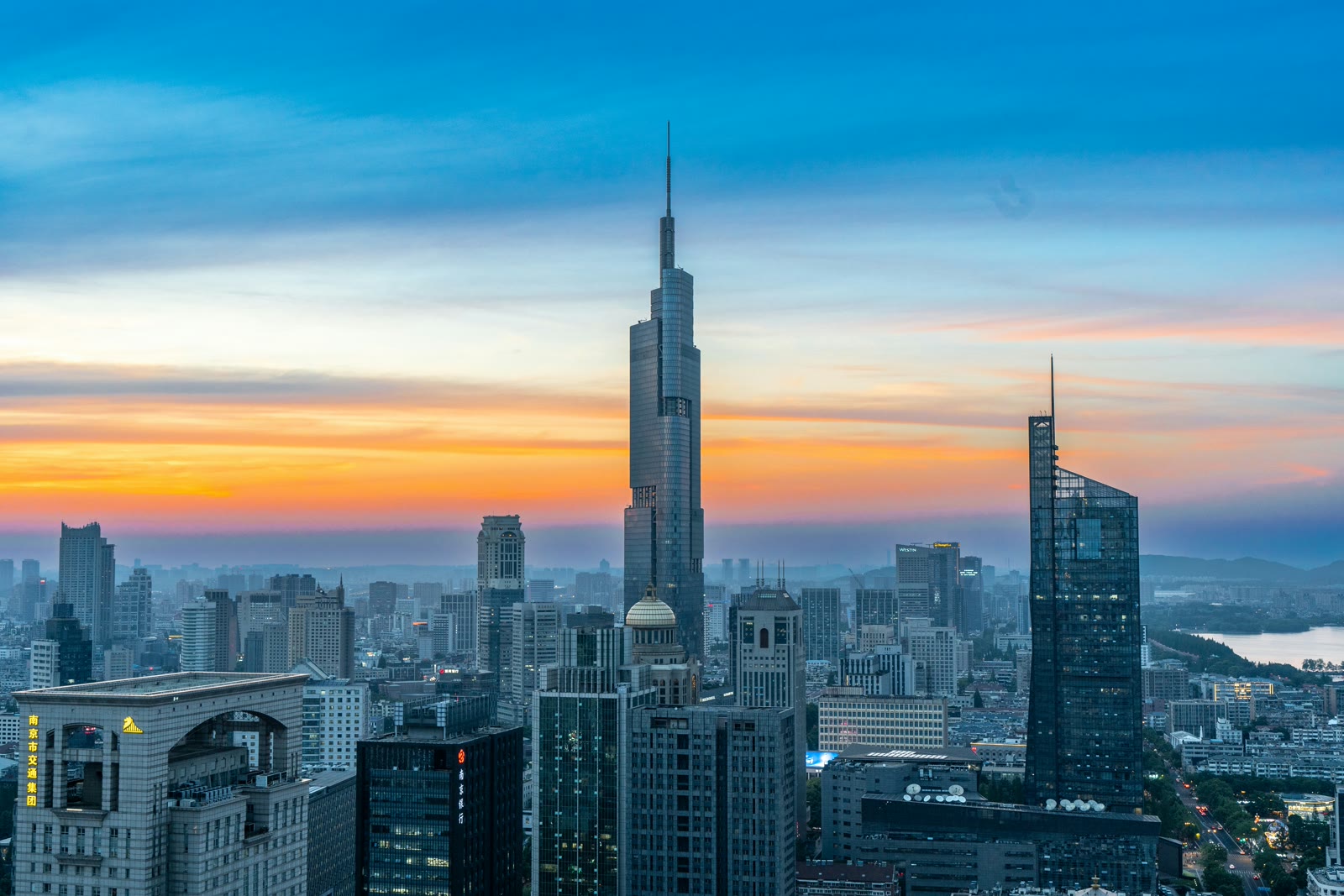
Nanjing (Nanjing), capital of Jiangsu province, sits on the Yangtze River about 300 km (186 miles) west of Shanghai. Once the capital of six dynasties and the Republic of China, it is now a modern city of 9 million with a 2,500-year-old historic core. The Ming dynasty city wall, a UNESCO-listed imperial tomb, and a Republican-era presidential palace share the landscape with glass skyscrapers and a 10-line metro system. Nanjing’s humid subtropical climate brings furnace-like summers and cold damp winters, but the brief spring and autumn seasons are among the best in eastern China. Below you will find our complete Nanjing travel guide covering weather, attractions, neighborhoods, hotels, and practical tips.
Nanjing Weather at a Glance
Nanjing has a humid subtropical climate (Koppen Cfa) with four distinct seasons. Summers (June-September) are hot and oppressively humid , July averages 32C (90F) with 80% humidity and a heat index that regularly surpasses 40C (104F). This earned Nanjing a spot among China’s legendary “Three Furnaces” alongside Wuhan and Chongqing. Winters (December-February) are cold and damp, with January highs around 7C (44F) and overnight lows below freezing. Snow falls 4-6 days per year but rarely accumulates.
The city receives about 1,100mm (43 inches) of rain annually. Most falls during the plum rain season (mid-June to mid-July), a stretch of near-daily downpours with 80% humidity. Autumn (October-November) is the driest and most comfortable season , October averages 22C (72F) with just 8 rainy days. Spring (March-May) warms quickly but is unpredictable, with 20C swings between day and night in March, making layers essential.
Explore Nanjing
Our complete Nanjing travel guide is organized into focused articles covering each aspect of your trip. Click through to any section below for detailed information:
- Nanjing Weather by Month , Month-by-month temperature, rainfall, humidity, and sunshine data with a seasonal packing checklist.
- Best Time to Visit Nanjing , Compare weather, crowds, hotel prices, and festivals across all seasons to pick your ideal travel window.
- Things to Do in Nanjing , 12 top attractions with ticket prices, opening hours, metro directions, and crowd-beating tips.
- Nanjing Events and Festivals , Annual calendar from the Qinhuai Lantern Festival to the Plum Blossom Festival and autumn foliage events.
- Best Neighborhoods in Nanjing , Xinjiekou, Confucius Temple, Gulou, Xuanwu Lake, and more with hotel price ranges and who each area suits.
- Where to Stay in Nanjing , Hotel recommendations by area and budget with Booking.com links for luxury, mid-range, and budget options.
- Nanjing Travel Tips and FAQ , Airport transfers, metro guide, visa rules, internet access, safety, tipping, and local food advice.
Where Is Nanjing and What Influences Its Weather?
Nanjing sits at 32N latitude on the southern bank of the Yangtze River, roughly 300 km (186 miles) inland from the East China Sea. At 15 meters (50 feet) above sea level, the city occupies the Yangtze floodplain with Purple Mountain (448 meters/1,470 feet) rising to the east. The inland location means no moderating ocean breezes , summer heat builds and winter cold settles in without the buffering effect of coastal waters.
The East Asian monsoon drives Nanjing’s seasonal extremes. In summer, the monsoon pushes hot, moisture-laden air from the South China Sea inland, producing the infamous plum rains and 32C+ temperatures. In winter, the Siberian High sends cold, dry air masses across eastern China, dropping temperatures near freezing. Spring and autumn are transitional periods when competing air masses create the pleasant, settled weather that makes these the prime tourist seasons.
Nanjing Quick Facts
Population: 9.3 million (2024 metro area). Language: Mandarin Chinese with a distinct Nanjing dialect. Currency: Chinese Yuan (CNY/RMB). Time zone: China Standard Time (UTC+8), no daylight saving. Airport: Nanjing Lukou International Airport (NKG), 36 km south of downtown.
Best months for sightseeing: October and April. Warmest month: July (32C/90F average high). Coldest month: January (7C/44F average high, -1C/30F low). Wettest month: July (184mm/7.2 inches). Driest month: December (28mm/1.1 inches). Annual sunshine: Approximately 2,000 hours.
Suggested Hotels in Nanjing
The Ritz-Carlton Nanjing
Occupying floors 62-81 of Deji Plaza Tower II, this is Nanjing’s premier luxury hotel with panoramic views of Purple Mountain and the Yangtze River, plus a 63rd-floor infinity pool. Best for luxury travelers and special occasions. Check rates and availability
InterContinental Nanjing
Set in the city’s tallest skyscraper with rooms starting on the 49th floor, lake-view dining, and direct 5-minute walk to Xuanwu Lake and Metro Line 1. Best for travelers wanting an iconic high-rise Nanjing experience. Check rates and availability
Jinjiang Inn Nanjing Xuanwumen
A reliable budget chain with clean rooms from 180 RMB (US$25), located 300 meters from Xuanwu Lake entrance and Xuanwumen Metro Station. Best for no-frills travelers who prioritize location and value. Check rates and availability
