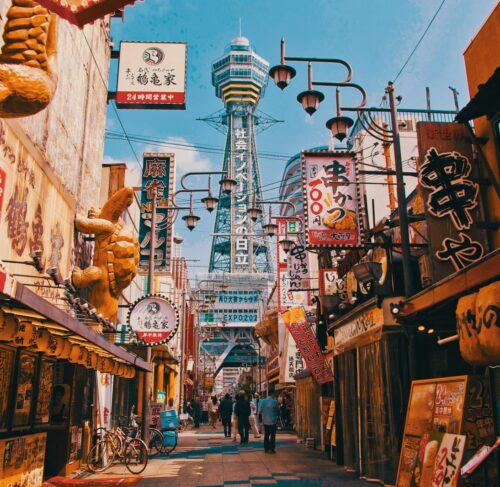
Osaka (大阪) is Japan’s third-largest city with 2.7 million people, serving as the economic heart of the Kansai region. Known nationally as “Japan’s kitchen,” the city’s food culture defines its identity from the Michelin-starred restaurants in Kita to the 100-year-old kushikatsu shops in Shinsekai. Osaka is more affordable, more casual
more direct than Tokyo. Locals are famously outgoing and the city’s unofficial slogan “kuidaore” (eat until you drop) captures the obsession with food that permeates every neighborhood.
Welcome to Osaka
The city pivots around two centers: Kita (north) around Osaka and Umeda stations, the business and transport hub, and Minami (south) around Namba, the entertainment and shopping district where Dotonbori’s neon canal draws visitors until 2:00 AM. The two are connected by the Midosuji subway line in 15 minutes. Osaka is compact enough to explore in 2 to 3 days. Day trips to Kyoto (30 minutes on JR Special Rapid), Nara (45 minutes), and Kobe (25 minutes) make Osaka an efficient base for the region.
Public transport is cashless and efficient with IC cards (ICOCA, Suica). The Osaka Amazing Pass (2,800 JPY/day) covers unlimited subway rides and entry to 40+ sites. English signage is comprehensive on all trains and at tourist sites. Osaka is safer than almost any Western city of comparable size. Tap water is drinkable, convenience stores are abundant 24/7, and you can leave a laptop on a cafe table while you use the restroom without worry.
Osaka Climate Overview
Osaka has a humid subtropical climate with hot summers, mild winters, and two rainy seasons. The Osaka weather by month guide has complete temperature and rainfall data. January highs average 9°C (48°F).
Cherry blossom season from late March to early April brings 14°C to 20°C (57°F-68°F) days and the city’s biggest tourist surge. The plum rain (baiu) front dumps 185mm of rain in June. August peaks at 33°C (91°F) with oppressive humidity. Autumn (October to November) delivers the most pleasant weather: 17°C to 23°C (63°F-73°F) with clear skies and autumn foliage at Minoo Park. Typhoons can affect August through October, with September being the most active month.
Seasonal Snapshot: When to Go
The best time to visit Osaka is October to November. You miss cherry blossom crowds, the autumn colors peak in late November, and temperatures are ideal for walking. Cherry blossom season (late March to early April) is spectacular but doubles hotel prices.
Golden Week (April 29 to May 5) should be avoided entirely due to domestic travel chaos. July and August are punishing with heat index values above 38°C. January and February offer the lowest prices but temperatures dip to 3°C (37°F) overnight. The Tenjin Matsuri on July 24-25 is worth enduring summer heat if you time your visit around it.
Things to Do in Osaka
The things to do in Osaka guide covers every major attraction with prices, hours, and tips. Osaka Castle’s 8-floor museum and observation deck (600 JPY). Dotonbori’s neon canyon and the Glico Running Man sign.
Shinsekai’s Tsutenkaku Tower and century-old kushikatsu shops. Universal Studios Japan with Super Nintendo World (8,600+ JPY). The Osaka Aquarium Kaiyukan with two whale sharks (2,700 JPY). Shitennoji Temple, Japan’s oldest Buddhist temple founded in 593 CE. Kuromon Market for fresh seafood skewers and wagyu beef. The Umeda Sky Building’s open-air Floating Garden Observatory (1,500 JPY) for sunset views.
Events and Festivals
Osaka’s events and festivals calendar peaks in summer. The Tenjin Matsuri (July 24-25) draws 1.3 million people for boat processions and 5,000 fireworks on the Okawa River.
The Kishiwada Danjiri Matsuri (mid-September) features 4-ton wooden carts raced through narrow streets. Cherry blossom season (late March) fills Osaka Castle Park with 3,000 blooming trees. Osaka Hikari Renaissance (November-December) lights Nakanoshima with a million LEDs. Setsubun (February 3) at Shitennoji Temple features sumo wrestlers throwing lucky beans.
Neighborhoods
The Osaka neighborhoods guide covers Minami (Namba/Dotonbori/Shinsaibashi for food and shopping), Kita (Umeda for business and luxury), Tennoji/Shinsekai (budget and retro), the Bay Area (USJ and aquarium), and Nakazakicho (cafes and vintage shops in pre-war wooden buildings). Each area profile includes boundaries, what it’s known for, who it suits, and price ranges.
Where to Stay
The where to stay in Osaka guide recommends hotels across Namba/Shinsaibashi, Umeda, and Tennoji. Each area has three hotel picks: one luxury, one mid-range, one budget. Namba offers the best food and nightlife access. Umeda suits business and transport convenience. Tennoji delivers the best value.
Suggested Hotels in Osaka
Swissotel Nankai Osaka
A five-star hotel directly above Nankai Namba Station with 546 rooms, a top-floor pool, spa, and direct airport train access in the basement. Best for luxury travelers wanting convenience with Dotonbori a 7-minute walk away. Check rates and availability
Hotel Gracery Osaka Namba
A mid-range hotel 3 minutes from Dotonbori with compact, well-designed rooms, a rooftop terrace, and excellent soundproofing despite the central location. Best for travelers who want to be in the middle of the action. Check rates and availability
Hostel Mitsuwaya Osaka
A budget hostel in a converted 90-year-old building with dorm beds from 2,800 JPY, a shared kitchen, and a rooftop terrace 10 minutes from Namba. Best for solo backpackers wanting character and community at hostel prices. Check rates and availability
Travel Tips and FAQ
The Osaka travel tips and FAQ guide covers Kansai and Itami airports, rail passes (Osaka Amazing Pass from 2,800 JPY), IC cards, subway navigation, visa-free entry for 68 nationalities, the zero-tipping culture, safety (exceptionally high)
language tips including the Osaka-ben phrase “ookini” (thank you). Kansai Airport connects to Namba in 38 minutes on the Nankai rapi:t (1,450 JPY). The Midosuji subway line connects the city in 15 minutes end to end.