

 Sunny
Sunny  Overcast
 This post may contain affiliate links. If you purchase through them, I may earn a small commission at no extra cost to you. Thanks for supporting our small business.
Parma is a compact city of 200,000 in Italy’s Emilia-Romagna region that delivers more per square meter than destinations twice its size. In a single day you can stand under Correggio’s swirling dome fresco in a Romanesque cathedral, taste 36-month Parmigiano Reggiano straight from a dairy’s aging room, and eat tortelli d’erbetta at a trattoria where the recipes haven’t changed in three generations. The city sits in the Po Valley at 57m elevation, giving it a humid subtropical climate with cold foggy winters (0°C/32°F lows), hot sticky summers (30°C/86°F highs), and spectacular spring and autumn seasons that align perfectly with the food calendar. Whether you’re here for the food, the opera, or the Romanesque architecture, Parma rewards travelers who come hungry and leave time for the hills.
Welcome to Parma: What Makes It Different
Parma isn’t a city that tries to impress you on first glance. The streets are neat but not jaw-dropping, the buildings are dignified rather than dramatic, and the pace is unhurried. What sets Parma apart is depth. The Cathedral’s Correggio fresco took 8 years to paint and rewarded that investment with a dome that changed Italian art. The prosciutto aging in Langhirano’s hills takes a minimum of 12 months (Legally 12, typically 24) before it earns the Ducal Crown brand. The opera tradition at Teatro Regio stretches back to Verdi’s own oversight of the acoustics. Parma doesn’t do superficial. It’s a city you appreciate more on day two than day one, and it’s best experienced through its products: the cheese, the cured meat, the music, and the art.
Parma Weather at a Glance
Parma has four distinct seasons shaped by its position in the Po Valley, surrounded by the Alps to the north and Apennines to the south. Winters (December-February) are cold, foggy, and damp: daytime highs average 6-9°C (43-48°F) with overnight lows around 0°C (32°F). Snow is rare (1-2 days per year on average). Springs (March-May) warm quickly from 14°C in March to 23°C in May, with moderate rainfall and increasing sunshine hours. Summers (June-August) are hot and humid: July averages 30°C (86°F) with 68% humidity making it feel several degrees warmer. Autumns (September-November) start beautifully (25°C in September) before descending into rain and fog by November. October is the wettest month at 85mm.
Parma Seasonal Snapshot
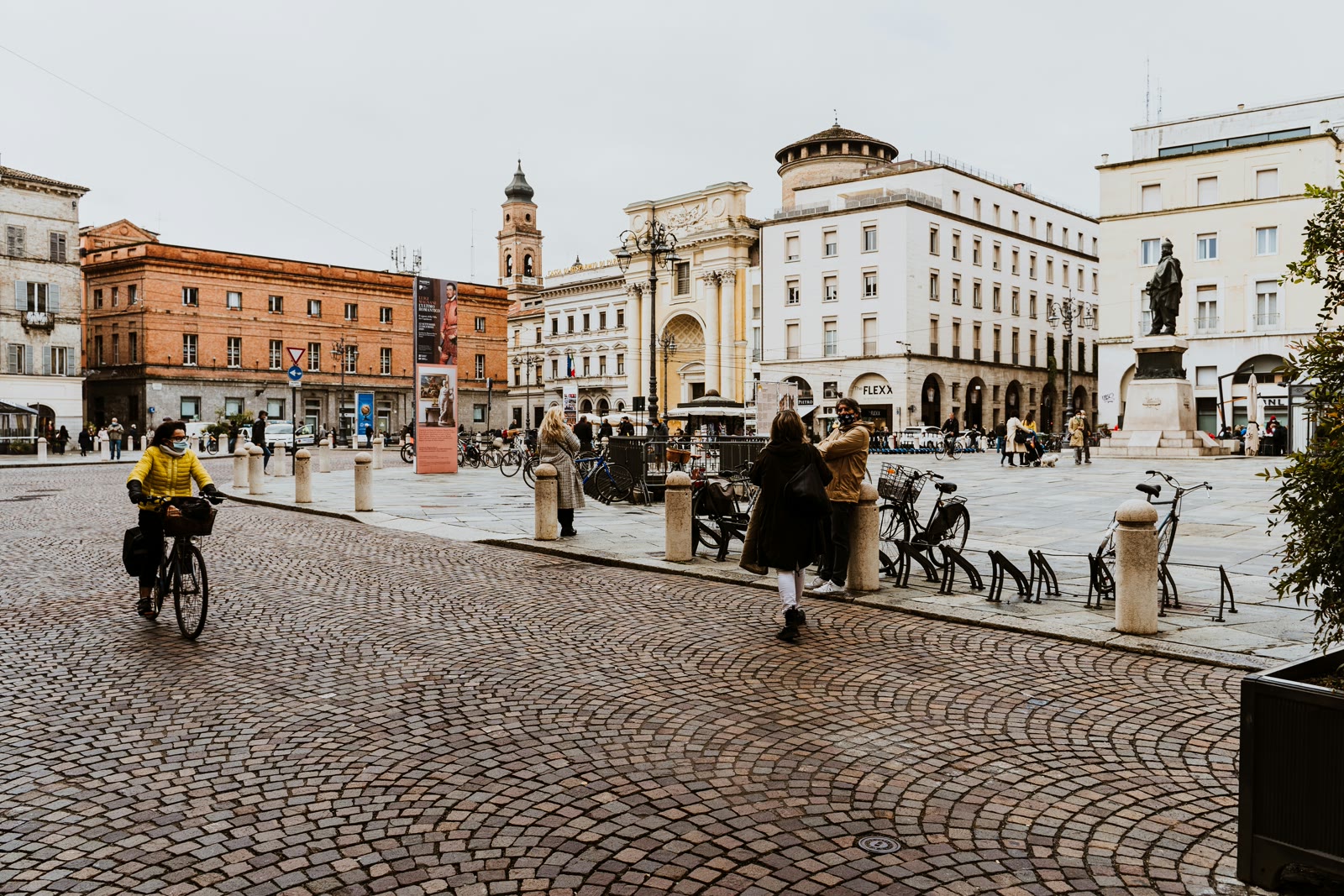
- Spring (March to May): The city wakes up. Outdoor cafes reopen in Piazza Garibaldi, the Parco Ducale blooms, and the hills south of the city turn vivid green. May brings Cibus (even years), the massive food fair that fills every hotel within 50km. Temperatures climb from 14°C in March to 23°C in May, with 6-8 hours of daily sun. The best season for food tours: dairies and prosciutto houses are in full production.
- Summer (June to August): Hot and humid. June is still pleasant (27°C), but July and August hit 30°C with sticky Po Valley humidity. Many small restaurants and shops close for ferie, especially August 10-25. Afternoon thunderstorms provide brief relief. Hotel rates dip, and the long daylight hours (sunset after 9pm in June) give you generous sightseeing windows. Only visit in August with confirmed AC.
- Autumn (September to November): The sweet spot returns. September offers 25°C days and the Festa del Prosciutto. October brings the Verdi Festival and the heaviest rainfall (85mm). November is foggy and gray but delivers white truffle season and ParmaJazz. Hotel rates are high in September-October, then drop sharply in November.
- Winter (December to February): Cold (0-6°C), foggy, and short on daylight (2-4 hours of sun). Christmas markets in Piazza Garibaldi run through December 24. January and February are the quietest months with the lowest hotel rates and empty museums. Snow is rare, but the persistent Po Valley fog can disrupt driving on the A1 autostrada. Best for budget travelers and museum-goers.
Parma Quick Facts
- Best months to visit: May, June, September, and October
- Warmest month: July (30°C / 86°F average high)
- Coldest month: January (0°C / 32°F average low)
- Wettest month: October (85mm, 9 rain days)
- Sunniest month: July (10 hours daily)
- Fog season: October to February (worst in November-December)
- Elevation: 57m (187 ft) above sea level
- Population: ~200,000
- Airport: Parma Airport (PMF), 3km from centro; Bologna BLQ (100km) for most flights
Explore Parma: Complete Travel Guides
Our Parma travel guide collection covers everything from monthly weather data to the best neighborhoods for your stay. Each guide is written with concrete details: exact prices, opening hours, bus numbers, and real restaurant and hotel recommendations.
- Parma Weather by Month , Month-by-month climate data with a detailed temperature and rainfall table. Covers what to expect in each month, what to pack, and how the Po Valley fog affects your visit.
- Best Time to Visit Parma , Season-by-season analysis of weather, crowds, hotel prices, and events. Tells you exactly which months to target and which to avoid based on your priorities.
- Things to Do in Parma , The complete sightseeing and experience guide. Cathedral, Baptistery, Teatro Regio, Parmigiano dairy tours, prosciutto houses, Castello di Torrechiara, and day trips to Modena and Bologna.
- Events and Festivals in Parma , Cibus (Italy’s biggest food fair), the Verdi Festival, Festa del Prosciutto, Mercanteinfiera antiques fair, truffle season, and Christmas markets with exact dates and ticket info.
- Best Neighborhoods in Parma , Centro Storico, Oltretorrente, Cittadella, Montanara, and the Langhirano food hills. Where to stay based on your travel style and budget.
- Where to Stay in Parma , Specific hotel recommendations for every neighborhood and budget tier. Palazzo Dalla Rosa Prati on Piazza Duomo to countryside agriturismi.
- Parma Travel Tips and FAQ , Airports, train connections, local buses, tipping, restaurant hours, safety, what to eat, visa info, and practical answers to common questions.
Where Is Parma?
Parma sits in northern Italy’s Emilia-Romagna region, in the Po Valley about midway between Milan (130km north) and Bologna (100km southeast). It’s on the main Milan-Bologna high-speed rail line, making it an easy stop between Italy’s two northern hubs: Milan Centrale to Parma takes 45-60 minutes, Bologna Centrale to Parma takes 50-60 minutes. The city lies at the foot of the Apennine mountains, which rise to the south and create the microclimate that produces Prosciutto di Parma: as warm Po Valley air hits the cooler hills, it creates ideal humidity conditions for slow-curing ham. The A1 autostrada and A15 (to La Spezia and the Ligurian coast) intersect just north of the city. Florence is 2 hours by train, Venice 2.5 hours, and Rome 3-3.5 hours.
What Influences Parma’s Weather?
Three factors shape Parma’s climate. First, the Po Valley geography: the city sits in a basin between the Alps (north) and Apennines (south), which traps cold air in winter and heat in summer. This is why Parma’s winters are colder and its summers hotter than cities at similar latitudes closer to the coast. Second, the valley’s high humidity (year-round 68-85%) comes from the Po River system and intensive agricultural irrigation. This humidity amplifies discomfort in both summer (making 30°C feel like 35°C) and winter (making 2°C feel biting). Third, the Apennine rain shadow effect means the hills south of Parma get significantly more precipitation than the city center, feeding the pastures where Parmigiano Reggiano cows graze.
Suggested Hotels in Parma
Parma’s best hotels cluster in the centro storico, with good-value alternatives across the river in Oltretorrente and practical chain options near the station. Here are three recommendations from luxury to budget. For a full breakdown by neighborhood with 12 hotel recommendations, see our where to stay in Parma guide.
Palazzo Dalla Rosa Prati
A historic palazzo on Piazza Duomo with suites and apartments overlooking the Baptistery and Cathedral, offering one of the most spectacular locations in any Italian city at this price point. Best for couples and travelers who want a landmark address with self-catering flexibility. Check rates and availability
Borgo delle Botteghe Luxury Suites
Recently renovated design apartments in a quiet side street 3 minutes from Piazza Garibaldi, with full kitchens, parquet floors, and sharp modern bathrooms. Best for self-catering couples who want hotel-quality design without hotel formality. Check rates and availability
Locanda Parsifal
An eco-friendly B&B 2.6km from Parma Station with free private parking (rare in Parma), reliable WiFi, and clean modern rooms. Best for road trippers and budget-conscious travelers who prioritize parking and quiet. Check rates and availability
