

 Sunny
Sunny  Overcast
 This post may contain affiliate links. If you purchase through them, I may earn a small commission at no extra cost to you. Thanks for supporting our small business.
Venice is a city like no other: 118 islands connected by over 400 bridges, where canals replace streets and the soundtrack is lapping water. Its humid subtropical climate brings hot summers and chilly winters with the famous acqua alta in autumn. This guide covers everything you need to plan a Venice trip.
Welcome to Venice
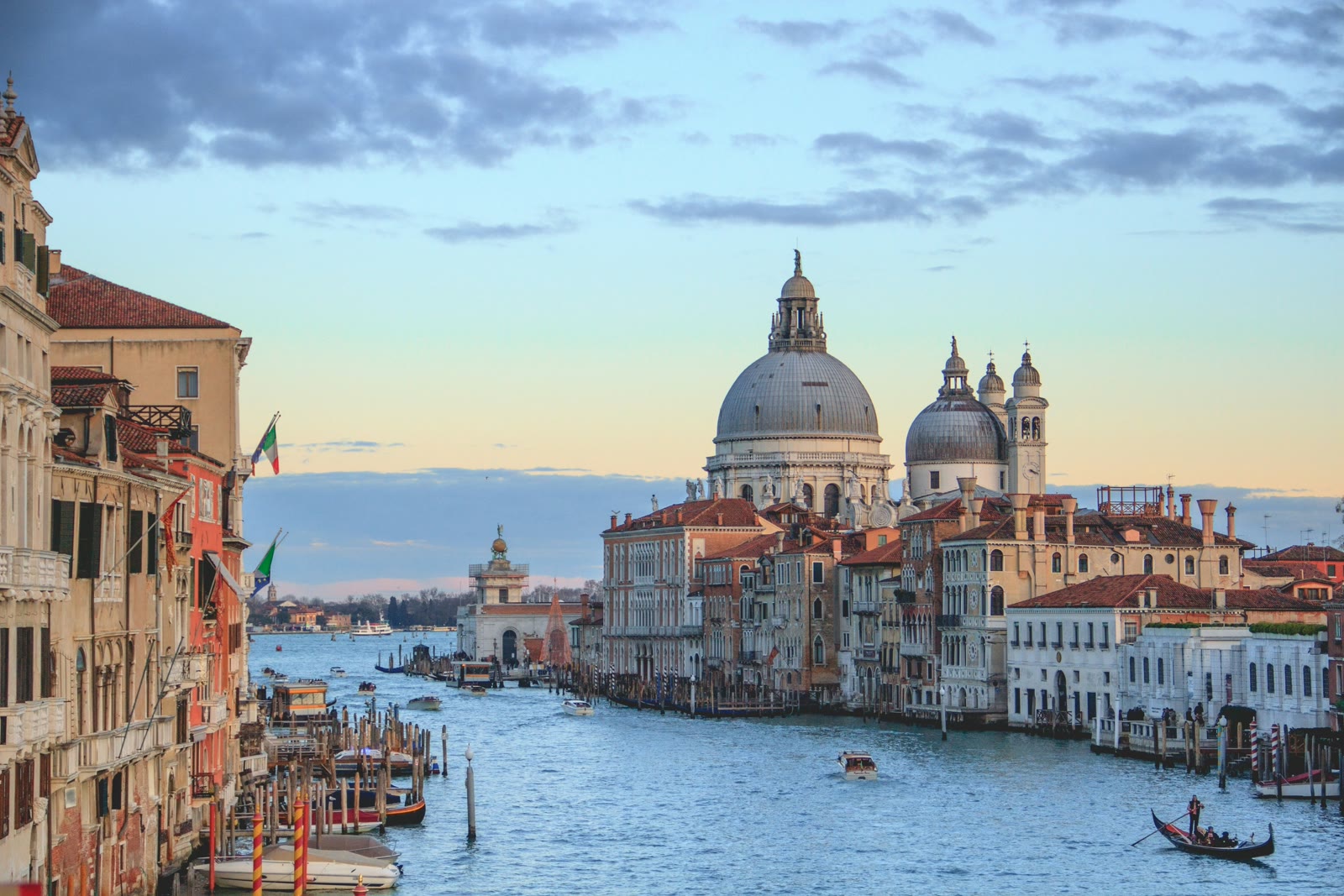
Venice defies comparison. A city built on 118 islands connected by over 400 bridges, where canals replace streets and boats replace cars. It’s been capturing travelers’ imaginations for centuries, and somehow the reality still exceeds the postcards. The first glimpse of the Grand Canal from the vaporetto, the sound of water lapping against stone at midnight, the golden mosaics of St. Mark’s – these moments justify every cliche ever written about this remarkable city.
But Venice is not a museum. It’s a living, breathing city of about 50,000 residents. Understanding the rhythm of the city – when to visit, where to wander, how to find the quiet corners – is what turns a good Venice trip into an unforgettable one.
Venice Climate at a Glance
Venice has a humid subtropical climate, shaped by its position in the Adriatic lagoon. Summers are hot and sticky (highs of 84°F/29°C in July and August). Winters are cold, damp, and atmospheric (highs of 44°F/7°C in January). The city receives about 30 inches (750mm) of rain annually, spread fairly evenly throughout the year.
The wildcard is acqua alta – seasonal high tides that can flood parts of the city, particularly St. Mark’s Square, between October and March. The MOSE flood barrier system has dramatically reduced major flooding events since becoming operational. Packing waterproof footwear in late autumn and winter is still smart.
Seasonal Snapshot
- Spring (March-May): Venice wakes up. Wisteria cascades over garden walls, temperatures climb from 54°F (12°C) to 72°F (22°C). The Biennale opens in May (odd years). April and May are two of the finest months.
- Summer (June-August): Peak season. Highs hit 84°F (29°C), humidity around 70%. Tourist numbers peak in July and August. Book months ahead. Start days at 7am.
- Autumn (September-November): The golden season. September is glorious. October brings moody skies and falling prices. November is quietest, with frequent acqua alta and fog.
- Winter (December-February): Cold, damp, magical. Highs 44-48°F (7-9°C). Carnevale in February is the highlight. January is the cheapest month.
Quick Venice Facts
- Hottest month: July/August (84°F / 29°C average high)
- Coldest month: January (44°F / 7°C average high)
- Rainiest months: April, June, November (10-11 rainy days)
- Best months overall: May, June, September
- Cheapest months: November, January
- Peak crowds: June-August, Carnevale (February)
- Acqua alta season: October-March
- Islands: 118, connected by 400+ bridges
- Currency: Euro (EUR)
Explore Venice in Depth
Ready to plan your trip? These detailed guides cover every angle of visiting Venice.
- Venice Weather by Month – Monthly temperatures, rainfall, acqua alta risk, and packing advice.
- Best Time to Visit Venice – When to go for weather, budget, events, or avoiding crowds.
- Things to Do in Venice – Landmarks, museums, islands, food experiences, and getting lost on purpose.
- Venice Events & Festivals – Month-by-month calendar from Carnevale to Biennale.
- Venice Neighborhoods – Guide to the six sestieri and which fits your travel style.
- Where to Stay in Venice – Hotels by neighborhood and budget tier.
- Venice Travel Tips & FAQ – Transport, acqua alta, safety, money, and essential answers.
Venice is not a city you conquer with a checklist. It’s a city you surrender to. Wander, get lost, stop for a spritz, and let the city reveal itself at its own pace.
